Original Korean article: Electric Power
The government is shifting its approach to offshore wind power development from an individual developer-led model to a government-led planned-site system. Domestic offshore wind projects have faced structural limitations where developers identify sites and directly conduct resident and fishery worker consultations along with various permits, resulting in extended project timelines and increased uncertainty. To resolve this bottleneck, the government is launching a planned-site system in which the government and local governments participate from the site selection stage.
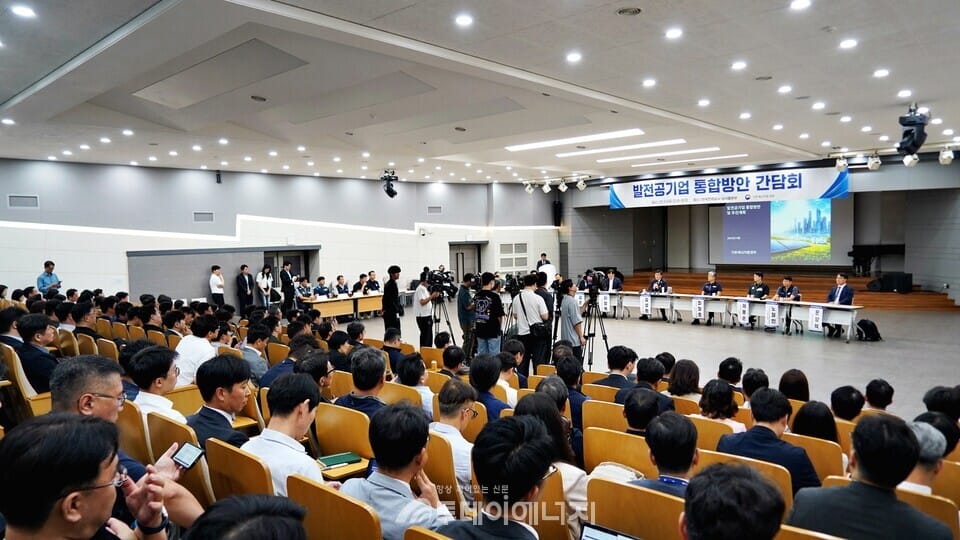
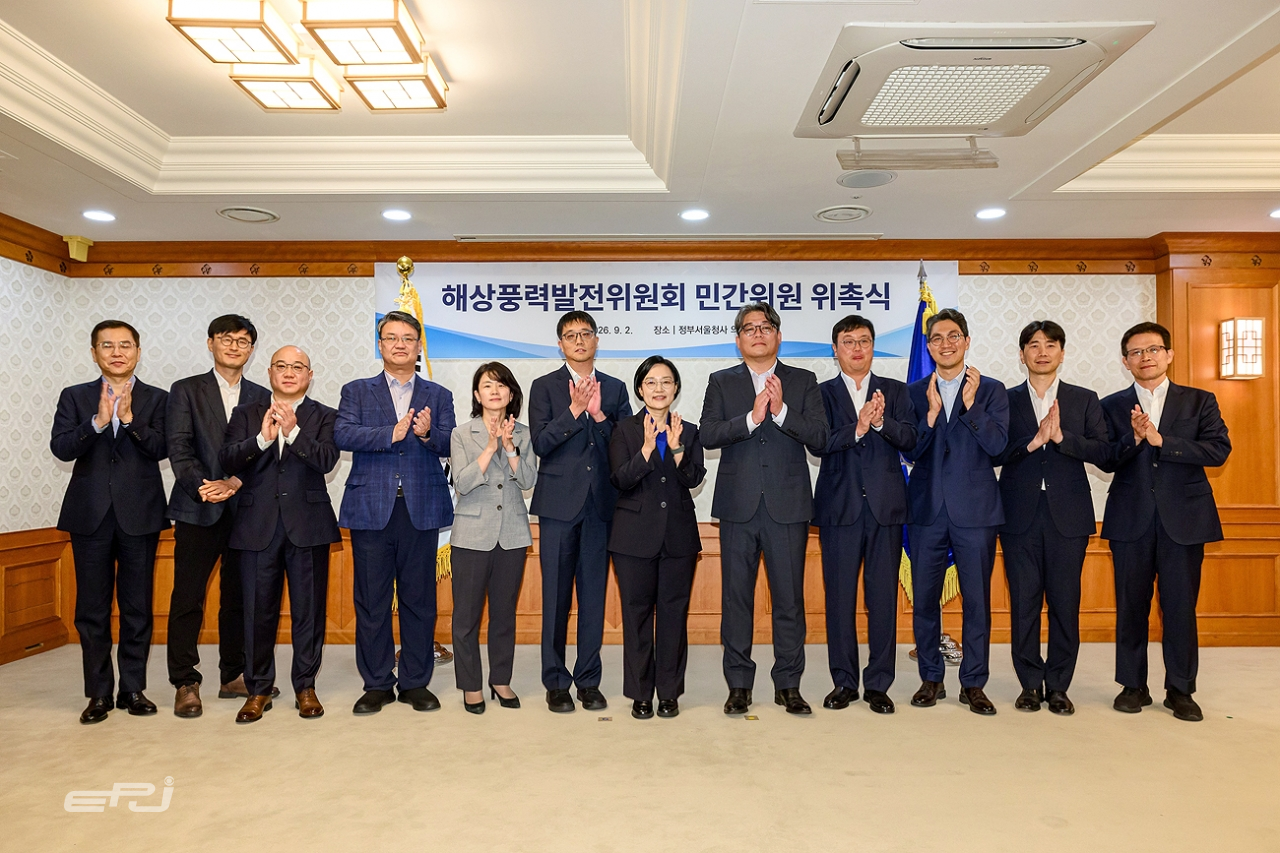
The Offshore Wind Power Generation Committee, under the Prime Minister's office, held its first meeting on September 2 at the Government Seoul Office and deliberated and passed the "Major Achievements and Implementation Plan for Offshore Wind Power" and the committee's operating rules.
The Offshore Wind Power Generation Committee is a whole-of-government body that deliberates and decides on key matters of planned-site projects including designation of preliminary districts and Power Generation Zones, confirmation of basic designs, developer selection, and implementation plan approval, based on the Offshore Wind Power Act. It is co-chaired by the Prime Minister and a private sector chair, and comprises 25 members including ministers from 12 relevant government agencies and 12 private experts. The first meeting of the committee held on this day is significant in that a new offshore wind development system led by the government from site selection through developer selection has begun to operate institutionally, despite only 0.37GW actually being supplied despite 33GW of Electricity Business License capacity.
The government will proactively identify suitable marine areas by synthesizing diverse information including wind resources, environment, fishery activities, maritime traffic, and military operations, then work with local governments to secure community acceptance before selecting developers. The planned-site process proceeds in the following order: preliminary district designation, basic design, Power Generation Zone designation, developer selection, implementation plan approval, and construction start and completion.
This is interpreted as a policy response to reduce the chronic gap between permits and actual deployment in the domestic offshore wind market. Currently, offshore wind projects with Electricity Business Licenses total approximately 33GW, but actual deployment stands at only 0.37GW due to overlapping permit delays, infrastructure shortages, and community acceptance issues. This is why changing the development process so that projects can proceed to actual construction start and completion has emerged as a core task, rather than simply increasing the volume of permits themselves.
Securing Practical Deployment Foundation Through 25GW Preliminary District Designation
The government's stated targets are quite ambitious. The plan is to designate preliminary districts totaling 25GW by 2031, with approximately 80 percent, or 20GW, connected to competitive auctions for Power Generation Zones three years later. Annual preliminary district designations are planned at 2.5GW each in 2026 and 2027, and 5GW each from 2028 to 2031. A roadmap was presented for competitive auctions to proceed at levels of 2 to 4GW annually from 2029 to 2034.
Through this, the government has set a goal to expand cumulative offshore wind deployment from the current 3.1GW in 2030 to 25GW by 2035 and 45GW by 2040.
A notable aspect is that the structure concentrating development risk on developers is changing. When the government uses location information systems to pre-screen suitable marine areas and reviews major permits with relevant agencies, developers can focus more on design, construction, and operations after selection. The government plans to lower project timelines and uncertainty by utilizing permit deemed approval under the Offshore Wind Power Act for planned-site projects.
Cost Reduction and Competitive Auctions: Business Viability Is Key
Another core element of the planned-site system is lowering the generation cost. The government plans to reduce project uncertainty by having relevant agencies pre-review major permits from the site selection stage, and after developer selection, by processing 28 laws and 42 permit matters in a one-stop manner through deemed approval. Additionally, the government plans to operate Power Generation Zone competitive auction ceiling prices significantly lower than existing competitive auctions.
The government has also presented a long-term goal of developing offshore wind as a competitive power source with low subsidy dependence. It has set targets of 250 won per kWh for generation cost in 2030 and transition to subsidy-free power by 2035.
However, policy design is important given that lowering bid prices and raising industry competitiveness are separate issues. While the government's reduction of project uncertainty could lower financing and development costs, leading to actual business viability improvements, if excessively low auction ceiling prices are applied, developers may have to absorb rising costs for equipment such as wind turbines, cables, and installation vessels, as well as construction expenses. Particularly since offshore wind requires large-scale initial investment and long-term capital financing, both price competitiveness in competitive auctions and project financing feasibility must be secured simultaneously.
Community Acceptance Determines Success of Planned-Site System
Institutionalizing coexistence with residents and fishery workers is also a core pillar of the planned-site system. The government plans to gather opinions from residents and fishery workers from the early stages of projects through Public-Private Councils led by local governments, and to prepare resident benefit-sharing and fishery worker coexistence measures. By having local governments form Public-Private Councils and conduct pre-consultations before developer selection, the government aims to manage conflicts that repeatedly occurred in the existing individual developer approach at the early project stage.
Transition of existing developers is also a variable. The government plans to establish procedures allowing existing developers who have already invested considerable costs in projects to be incorporated into the planned-site system if they meet certain requirements. This can be seen as a mechanism to minimize policy conflicts between existing developers and new planned-site projects, and to leverage already accumulated development experience and project data.
The government plans to designate the first preliminary districts of approximately 2 to 3GW in scale by the end of this year. It will conduct inter-agency consultations and evaluations of candidate areas through October, then designate preliminary districts by December through Offshore Wind Power Generation Committee approval. Subsequently, following basic design and environmental review, and Public-Private Council discussions led by local governments, the government will proceed to Power Generation Zone designation and developer selection, with plans to begin deploying offshore wind based on planned-sites as early as 2033.
Industry Hopes for Predictability; Concerns Over Pricing and Developer Selection
The wind power industry is receiving the government-led planned-site approach positively, as it can reduce location and permit uncertainty and enhance long-term market predictability. In particular, if annual competitive auctions of 4GW or more and a 10-year auction roadmap materialize, related industries including wind turbine manufacturers, submarine cables, ports and installation vessels, and construction and operations and maintenance services could benefit in establishing medium to long-term investment plans.
However, concerns have emerged that if planned-site competitive auction ceiling prices are significantly lower than before, it could lead to deteriorating business viability and intensified price competition. Additionally, the market is interested in how technology capability, supply chains, and regional coexistence will be evaluated in the criteria for incorporating existing developers into the planned-site system and in the developer selection process.
An industry official stated, "For planned-sites to go beyond simply increasing capacity and lead to actual construction start, completion, and industry competitiveness enhancement, swift government site designation must follow. Above all, realistic bid prices, clear developer selection criteria, and effective regional coexistence measures must be prepared together." The official added, "It is concerning that a developer representative is included among the private sector members comprising the Offshore Wind Power Generation Committee, as this could raise fairness concerns in deliberations. Even if the person holds representativeness as an industry association leader, from other developers' perspectives it could appear as a player serving as a referee, so safeguards against conflicts of interest and mechanisms to ensure neutrality also appear necessary."