

Listing plans and business performance
“Just as the arrival of Apple's iPhone rapidly changed the mobile phone market previously led by Nokia, we believe the long-duration energy storage system (ESS) market will also expand its share very quickly during the current period of change as artificial intelligence (AI) and the energy transition converge.”
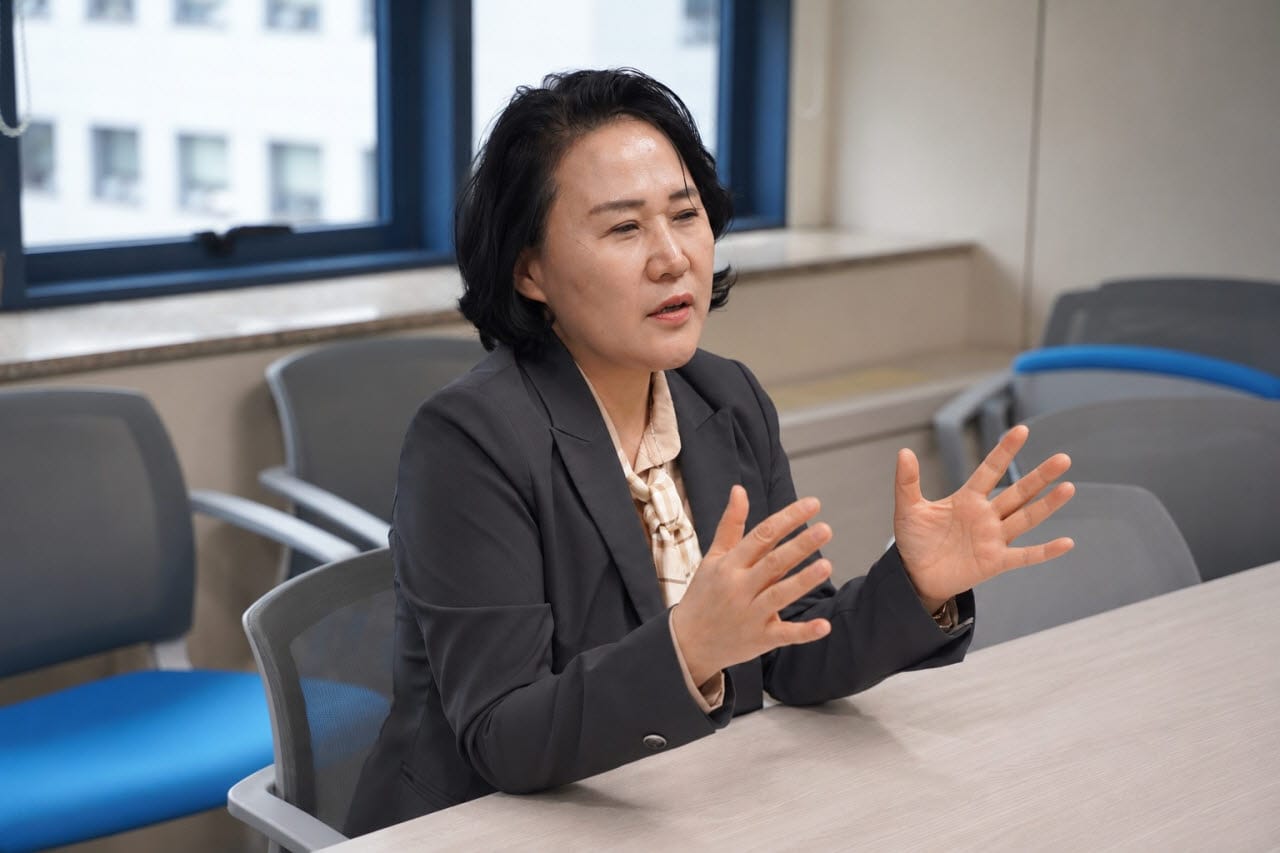
In a recent interview with Edaily, JNTG chief executive Lee Eun-sook explained the reason for pursuing a KOSDAQ listing: “From 2026 to 2027, downstream markets including long-duration ESS, hydrogen fuel cells and water electrolysis are entering a period of substantial growth.” Lee said: “The main purpose of the listing is to expand production capacity and production lines to respond in advance to global customers' demand forecasts and increasing orders.”
Founded in 2011, JNTG develops and produces carbon materials used in energy storage, utilization and production, ranging from non-lithium rechargeable-battery ESS to hydrogen fuel cells and water electrolysis. Its main businesses include developing carbon electrodes used as electrode components in long-duration ESS, gas diffusion layers used as electrode components in hydrogen fuel cells, and carbon substrates used as electrode components in distributed generation and water electrolysis systems.
Its main customers include Doosan Fuel Cell, Bosch and Hyundai Motor. Its financial results have also been improving, with revenue of approximately 72.3 billion won and operating profit of 21.3 billion won in 2025.
Demand for non-lithium long-duration storage
Lee explained: “The expansion of AI data centers and renewable energy is increasing the need for long-duration ESS that can store energy for extended periods and supply it reliably. While lithium-ion batteries lead the ESS market on the strength of their high efficiency and energy density, non-lithium long-duration ESS are also forming a new market in applications requiring extended storage, long-term operation and high safety.” In non-lithium rechargeable-battery ESS, the company has secured materials and process technologies that improve electrode performance and durability.
Conventional lithium-ion batteries require battery installations to be increased to 2 to 3 times their size to provide 6 to 10 hours of long-duration operation, substantially increasing initial investment costs. Even lithium iron phosphate (LFP) batteries cannot completely eliminate the risk of ignition, which limits indoor installation.
Lee emphasized: “Non-lithium ESS offer relatively low fire risk because of their electrolyte characteristics and are suitable for extended charging and discharging and long-term operation. Some systems are designed for long-term operation of around 15 to 20 years.”
The urgent need for electricity supply and demand solutions arising from rapid AI market expansion and growing data center numbers is favorable for the company. Non-lithium long-duration ESS, whose strengths include low fire risk and long-term operability, are attracting attention as an alternative for balancing electricity supply and demand.
Materials technology and share offering
Companies capable of manufacturing carbon electrode materials are reportedly limited to JNTG and companies in Canada, Japan and Germany. Lee said: “From carbon fiber raw materials through sheet forming, resin coating and carbonization, we developed all plant equipment and process and materials technologies entirely in-house, without adopting outside technology. We have devoted more than 20 years to research and development, and key researchers who have stayed with the company for more than 10 years have refined the technology.”
Lee added: “A transition to clean energy is essential to achieving net zero. JNTG supplies core carbon materials for systems covering the full cycle of energy production, storage and utilization. We will continue expanding our business areas based on our technology and mass-production competitiveness and grow into a leading company in the global energy materials market.”
JNTG plans to offer a total of 4.3 million shares through the listing. The indicative offering price is 26,400 to 31,900 won per share, with an offering size of approximately 137.2 billion won at the top of the range.
Original Korean article: Edaily
English brief by Korea Wind Intelligence, koreawindintel.com

















