As controversy spread over a proposed ordinance amendment that would recognize resident business investment in Jeju's wind power projects as a form of "development profit sharing," the Jeju Special Self-Governing Province issued a clarification.
The gist of the clarification was that the province would pursue a "two-track" approach, recognizing both the development profit sharing fund method and resident business investment. However, since the basic position of recognizing resident business investment as a form of profit sharing remains unchanged, controversy over the amendment as a move to reduce the burden on private project developers is expected to continue.
Officials defend the two-track approach
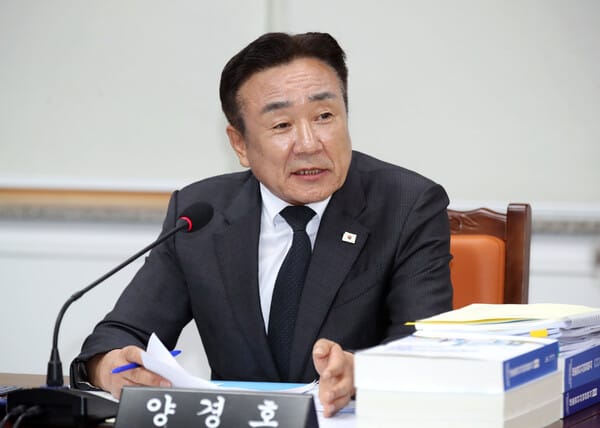
At the Future Economy and Industry Committee meeting of the 454th first regular session of the Jeju Provincial Assembly held on September 14, 2026, Jo Seon-hee, director of the Climate and Energy Bureau of Jeju Province, responded to questions from Democratic Party member Yang Gyeong-ho regarding controversy over the comprehensive amendment to the "Ordinance on Wind Power Project Licences and District Designation in Jeju Province." She said: "We are not abandoning the development profit sharing fund. We will receive a certain portion while adding resident participation."
However, since adding resident participation results in reducing the burden that project developers must share, the grounds for controversy remain intact.
Yang pointed out that "the problem was raised through Article 35 of the comprehensive amendment, which concerns wind power profit sharing, and there appear to be ambiguous parts in Governor Wi Seong-gon's response during the September 4 provincial policy question session, which is why some are raising objections."
Article 35, "Profit Sharing in Wind Power Projects," emerged as the central point of contention in the amendment submitted to this regular session.
This article, which establishes the basis for a profit-sharing system in wind power projects, stipulates that "those seeking to conduct power generation projects may be required to submit a development profit sharing plan that includes a resident participation plan, in order to return development profits from wind, a public resource, to Jeju Special Self-Governing Province."
When submitting a profit sharing plan that includes measures to return development profits to Jeju Province, it allows a resident participation plan to be included.
Currently, Jeju's method of sharing wind power development profits involves contributing a portion of wind development profits in the form of donations. Project developers contribute 17.5 percent of net profit for the current period or an equivalent 7 percent of sales revenue according to the development profit sharing plan.
Concerns over weakening of wind resource sharing principle
However, if the amendment passes, project developers could share development profits through a "resident participation plan" instead of the existing donation method, raising concerns that the "wind resource sharing" principle could be compromised.
In response, Director Jo said: "We want to proceed with a model where the fund is paid as before and residents can also participate and earn returns. The ordinance requires project developers to submit a plan. If you propose how to share profits, we will consult based on the standards we have."
Director Jo stated: "We are not abandoning the wind power sharing fund, nor are we taking less than before. We will secure profit to return maximum benefits to residents and create a model where residents can also invest and generate returns."
Yang pointed out that "the submitted ordinance does not clearly distinguish between fund payment and resident participation," and Director Jo responded: "The ordinance states that 'a sharing plan may be submitted,' and I think we could separate this and make fund payment and resident participation different articles."
Regarding Director Jo's statement that project developers would prepare and submit development profit return plans, concerns were also raised that developers could employ tactics to increase the resident participation ratio and reduce overall profit sharing.
Democratic Party member Han Gwon, representing districts 1 and 2 of Ildo and Geonip-dong, expressed concern about Director Jo's remarks regarding allowing developers freedom in how much development profit sharing to contribute based on business scale and sales: "If you give project developers autonomy regarding profit sharing, the resident participation portion could consume the entire pie of benefits returning to all residents."
Director Jo responded: "I am not saying project developers can propose amounts arbitrarily. We intend to maintain the existing standard of 17.5 percent of net profit for the current period or 7 percent of sales."
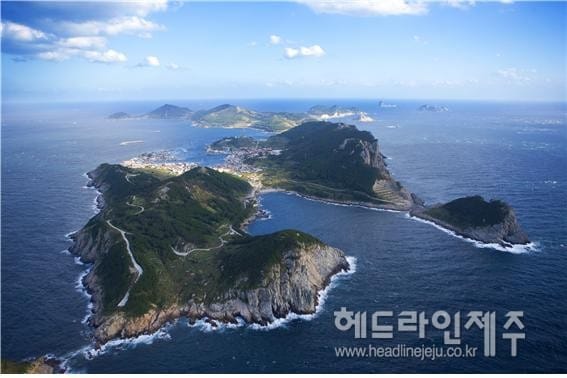
Director Jo said: "We will not accept fixed amounts like the 130 billion won presented by Chuja offshore wind power. If a project developer proposes an amount within the standards set, we will maximize resident benefits within that range."
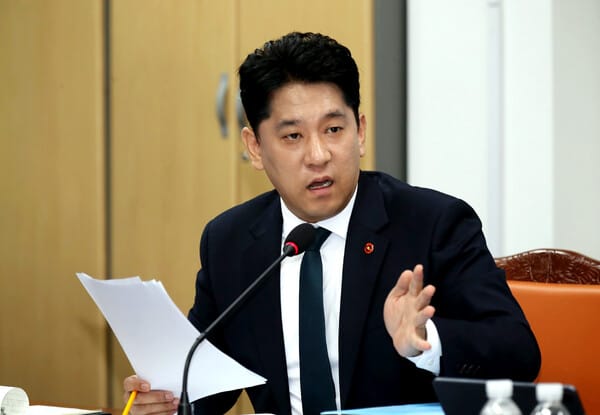
Han then cautioned: "Resident participation is good, but only residents with money can participate, and it is not true profit sharing. We must be vigilant about this."
Han urged: "Since Article 304 of the Jeju Special Law on 'public management of wind resources' is a value Jeju has upheld, I ask that you create a roadmap for the Chuja offshore wind power project and disclose it to Jeju society."
Broader policy tensions emerge
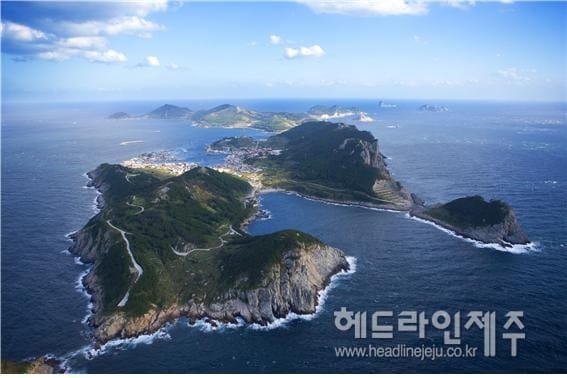
Criticism was also raised that Governor Wi's statement that "profits generated from Chuja offshore wind power will be shared with Jeollanam-do" is out of step with the situation, in which the province is proposing to change the government's U-shaped energy expressway policy to a Y-shaped one that includes Jeju.
National Power Party member Kim Hwang-guk, representing districts 1 and 2 of Yongdam-dong, said: "Governor Wi treated it as a done deal in his response to the provincial policy question that Chuja offshore wind power must connect to the national power grid through Jeollanam-do. The province's original request was for the government's energy expressway policy, the U-shaped energy expressway, to be changed to a Y-shaped system that includes Jeju. This appears to be a very significant issue."
Kim said: "Because of these issues, civil society groups are demanding that deliberation of the ordinance be suspended. In particular, the ordinance is inadequate regarding profit sharing and resident participation."
Director Jo said: "I believe the part that reads 'development profit sharing plan including resident participation plan' in the wind power development profit sharing article is a source of misunderstanding. Please give us your views on this part so that it can become a good ordinance that benefits residents," effectively acknowledging that the ordinance requires revision.
However, as long as the content recognizing resident investment participation as a sharing fund is not withdrawn, the intent of profit sharing is expected to fade further, and controversy over the amendment as a tailor-made revision for private project developers in Chuja-do is forecast to intensify.
In a recent statement, the Jeju Environmental Movement Union criticized the change in Jeju's development profit sharing method, saying: "The change cannot be seen as anything but a retreat from the wind resource sharing principle, given that it has been presented as an committee alternative to ease the profit-sharing burden on large-scale wind power project developers including Chuja offshore wind power, rather than as a response to recent diversity in profit sharing." The union called on the provincial assembly to suspend deliberation of the ordinance.
Original Korean article: Headline Jeju
English brief by Korea Wind Intelligence, koreawindintel.com