

Calls are growing to address structural obstacles, including securing electricity, selecting sites and permitting delays, to develop AI data centers, a core foundation of the artificial intelligence industry, as national strategic infrastructure. As AI data centers evolve beyond simple data storage facilities into industrial infrastructure that produces intelligence through AI computing and supplies services, these voices argue that relevant laws and regulations must be updated to respond to global competition for investment.
The Korea Telecommunications Operators Association (KTOA) held its 12th AI Future Value Forum at the KTOA building in Samseong-dong, Gangnam-gu, Seoul, on October 21 under the theme “South Korea’s AI sovereignty and global competitiveness: AIDC law, policy and industrial strategy.” Experts from the telecommunications industry, academia, the legal profession and research institutions attended to discuss expanding AIDC infrastructure and improving regulations.
Participants agreed on the need to develop AI data centers as key assets supporting national AI competitiveness and economic security. In particular, they identified the need to make relevant legislation more effective and reduce bottlenecks in project implementation to attract global technology companies’ data center investment to South Korea.
AI data centers evolve beyond data storage
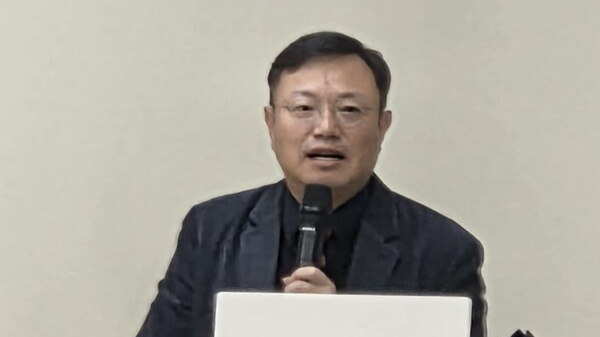
Lee Young-tak, vice president of SK Telecom’s AIDC Integrated Promotion Group, explained that AI data centers are evolving beyond the data storage role of conventional facilities into facilities that use large-scale computing to produce AI services and supply them externally.
In this explanation, AI data centers provide the foundation on which AI models and services operate, while also supporting the growth and overseas expansion of South Korea’s AI industry. Establishing related facilities and an industrial ecosystem domestically could strengthen the competitiveness of AI technologies and services, attract investment from overseas companies and support growth in related industries.
Competition to attract AI data centers from global technology companies is also intensifying. Countries are promoting different advantages to attract investment, particularly in the Asia-Pacific region.
Japan is attracting major technology companies’ data centers with active government support, while Malaysia highlights relatively low labor and construction costs.
Australia offers advantages in electricity and extensive land availability, illustrating how countries are competing for AI data centers on the basis of different strengths.
South Korea’s stable electricity supply conditions and semiconductor competitiveness are cited as strengths.
Lee emphasized that South Korea must not miss opportunities to attract investment as global competition for AI data center investment intensifies. While identifying a stable power grid and telecommunications infrastructure, the semiconductor industry, and data center construction and operating capabilities as domestic strengths, Lee argued that business conditions must improve before investment demand shifts to other countries.
Expanding AI data centers is also linked to stimulating regional economies. Data center construction and operation create demand in related industries, including electricity, cooling and telecommunications, and could expand industrial ecosystems involving local companies and universities. However, the effects on related industries and regional economies need to be considered alongside direct employment.
Implementing rules must reflect industry conditions
On the legal and regulatory side, participants called for the enforcement decree and enforcement rules of the AIDC special act to be designed around conditions in the industry.
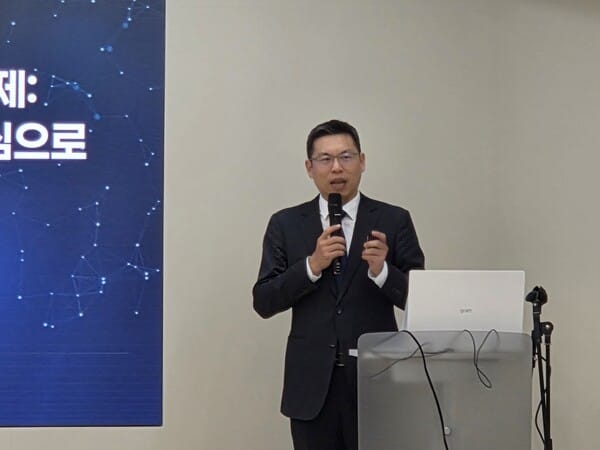
In the presentation by Song Do-young, a lawyer and head of Jipyong’s AI Infrastructure Center, topics of strong industry interest were addressed, ranging from the definition and recognition criteria for AI data centers to construction and operation notifications, consolidated permitting, exemptions from facility installation standards and power grid requirements.
Power share and capacity are central to recognition criteria
A priority in developing the implementing regulations is establishing specific criteria for which facilities qualify as AI data centers.
According to the presentation, discussions are considering a definition centered on facilities equipped with AI equipment and the electricity and cooling infrastructure needed to operate it, and meeting a minimum AI equipment share of power demand or a minimum capacity threshold.
A key issue is whether the criterion should be the share of total information and communications equipment power accounted for by AI equipment, such as AI accelerators, or the power capacity of the AI equipment itself. An approach distinguishing conventional servers from AI equipment by electricity consumption is being reviewed. Participants also raised the need to adjust criteria flexibly as equipment configurations and technology develop.
The presentation explained that discussions on the AI equipment share of power demand were considering a range of 50% to 70%. These figures are not finalized criteria, however, but values under review as industry feedback is gathered.
Setting the criteria too high could constrain the conversion of existing data centers into AI data centers. Conversely, setting them too low could allow conventional data centers to seek regulatory benefits by adding only a small amount of AI equipment. This is why criteria need to consider both industry development and regulatory effectiveness.
Notification and consolidated permitting to reduce project delays
Simplifying data center construction and operating procedures is another major issue.
The presentation described an approach centered on notification rather than licensing or registration, given the special act’s focus on promoting the industry. It also suggested reviewing safeguards to prevent conventional data centers from exploiting gaps in the notification system to convert into AI data centers in name only.
Discussions also cover a system for consolidating permits and approvals from multiple authorities, as well as procedures for cases in which no decision is issued within a specified period. The aim is to reduce the time developers spend completing separate procedures with individual authorities and address prolonged permitting delays.
For consolidated processing to shorten actual project timelines, however, consultation and review procedures among the relevant authorities must operate efficiently. Participants also identified the risk that repeated procedures or permitting delays by local governments could limit the system’s effectiveness even with statutory processing deadlines.
Adjusting installation standards to ease land and project costs
Participants also discussed adjusting existing facility standards to reflect the characteristics of AI data centers.
The presentation identified regulations covering parking, environmentally friendly vehicle charging facilities and the installation of artworks as major areas where industry is seeking changes. Unlike ordinary buildings, data centers devote a large share of their space to servers, network equipment, cooling systems and electrical equipment, and require specialized infrastructure for continuous operation. The argument is that calculating installation obligations solely from a building’s total floor area may not reflect actual operating characteristics.
In particular, participants raised the need to apply parking requirements appropriately and adjust related obligations to account for equipment space, since data centers have relatively few on-site personnel for their building size. The aim is to review regulatory improvements so that facility installation standards do not increase project costs and the burden of securing land.
For these exemptions to apply in practice, however, consistency must be ensured between relevant legislation and subordinate regulations, and detailed criteria must be developed so that local governments apply them consistently during permitting.
Power impact assessments and the balance between grid stability and investment
Electricity-related requirements for AI data centers, which consume large amounts of power, are another important issue.
The presentation explained that a 50 MW threshold is being discussed for power impact assessments and that some industry participants have requested a higher threshold. The applicable threshold and detailed requirements remain matters to be specified through further discussions between relevant ministries and industry.
Because AI data centers require a stable supply of large amounts of electricity, ensuring power grid stability is important. At the same time, overly stringent requirements could increase the costs and land needed for electrical equipment and energy storage system installations, potentially hindering investment.
This explains calls to design the system with comprehensive consideration of data center locations, electricity supply conditions and regional infrastructure development plans. The explanation also stressed that local governments seeking to attract data centers need to review power supply plans, funding arrangements and community acceptance in advance.
For the AI data center special act to achieve its objective of developing the industry, it must go beyond establishing statutory support provisions and provide standards and procedures that work in practice. Coordinated facility recognition criteria, simpler permitting, electricity-related regulation and appropriate building standards are expected to support the expansion of domestic AI infrastructure and efforts to attract global investment.
Tax support and power grid rules also affect investment
Institutional support to ease the costs of large-scale investment and adjustments to power grid regulations were also identified as major tasks.
SK Telecom Vice President Lee Young-tak argued that tax support reflecting the characteristics of AIDC projects should be considered to attract investment from global technology companies. Lee explained that AI data centers are not merely facilities consuming AI services themselves, but infrastructure that supplies computing resources to external companies to produce intelligence and services, warranting support as a national strategic industry.
Lee also argued that grid codes, the connection requirements used to ensure power system stability, and the burden of energy storage system (ESS) installation should be examined in relation to investment conditions. Ensuring grid stability when large electricity consumers connect to the grid is essential, but excessive requirements could increase project costs and land needs, making investment harder to attract.
Participants therefore called for reasonable standards that reflect actual equipment operations and on-site conditions while maintaining the policy objective of power grid stability. Finding a balance between stability and investment incentives through consultation among the government, developers and experts was identified as a task.
AIDC facilities support demand for AI computing while combining a range of industries, including semiconductors, electrical equipment, cooling technology and telecommunications infrastructure. The analysis is that translating domestic industrial strengths into global competitiveness requires more than expanding facilities: laws and regulations, electricity infrastructure and investment support systems must also be updated together.
Original Korean article: koit.co.kr
English brief by Korea Wind Intelligence, koreawindintel.com

















