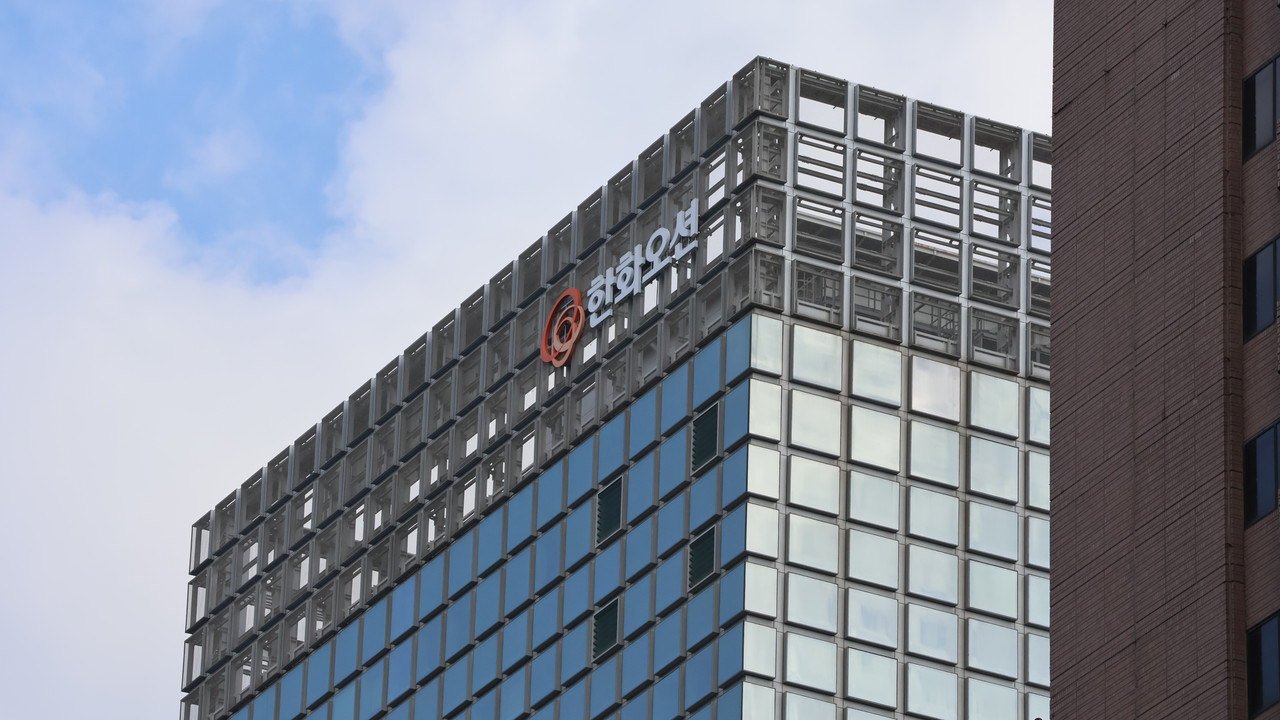
Hanwha Ocean is undergoing a structural transformation, moving beyond its role as a shipbuilder to become a project developer that directly plans and commissions offshore wind projects.
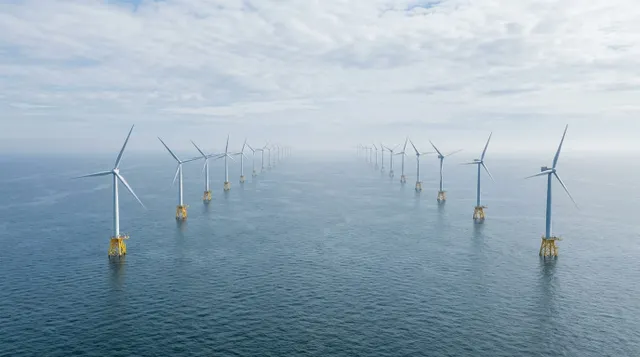
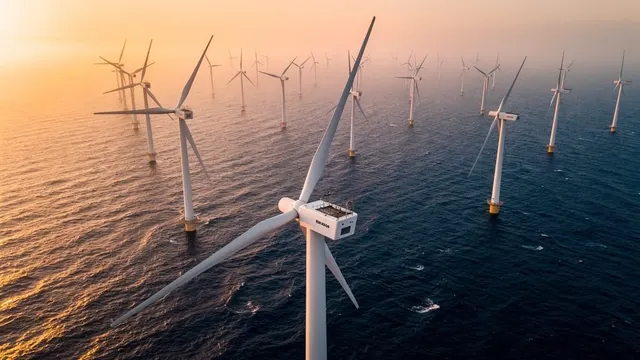
According to the shipbuilding industry on October 31, the Sinan Ui offshore wind project led by Hanwha Ocean, with a total project cost of 3.4 trillion won, most clearly demonstrates this shift.
In this project, Hanwha Ocean is performing engineering, procurement and construction (EPC) alongside Hyundai E&C and has secured 1.9716 trillion won in construction work as its share.
Unlike the typical model where construction companies or public power generators lead as developers while shipyards take on subcontracted work for floating structures and equipment, Hanwha Ocean has participated as the overall developer, leading the entire project development process including licence acquisition, community acceptance, and financial arrangements.
This development leadership has led to in-house order generation and value chain integration. The Sinan Ui project involves high-difficulty work to install large 15-megawatt wind turbines in the middle of the sea.
Rather than outsourcing this process to external fleets, Hanwha Ocean directly commissioned one large offshore wind turbine installation vessel (WTIV) worth 768.7 billion won at its Geoje shipyard through an affiliated special purpose vehicle.
With offshore substation manufacturing and upper structure engineering also falling within Hanwha Ocean's scope of work, a structure has been created where the company captures not only construction margins but also project development margins, profits from building high-value specialized vessels, and future maintenance and repair revenue.
This transformation has been supported by strong performance in existing ship construction. On October 27, Hanwha Ocean announced through earnings disclosure that it recorded consolidated sales of 3.4139 trillion won and operating profit of 485.7 billion won in the third quarter of this year.
This represents a 12.9 percent increase in sales and a 67.6 percent increase in operating profit compared to the same period last year. Despite reduced working days due to summer vacation and the Chuseok holiday, full-scale construction of high-priced liquefied natural gas carriers drove cumulative third-quarter operating profit to 1.6629 trillion won, up more than 80 percent year-on-year.
Expanding independent business domains
Hanwha Ocean is also expanding independent business areas to defend against the shipbuilding industry's inherent downcycles. A prime example is the acquisition of Dynamac, a Singapore-based marine plant upper structure manufacturer, which has strengthened its capacity in floating oil production, storage and offloading (FPSO) systems.
The establishment of Hanwha Shipping, a shipping affiliate, to directly operate eco-friendly fuel propulsion vessels also aligns with efforts to move shipyards to the top of the supply chain in cargo owner-shipowner-shipbuilder relationships.
The same strategy operates in North American specialized vessels and defence. Hanwha Ocean has used the Philadelphia-based Philly Shipyard, acquired at the group level, as a base to circumvent the US Jones Act barrier and has consecutively won US Navy maintenance, repair and overhaul (MRO) contracts.
On October 30 (local time), Hanwha Ocean, through Hanwha Defense USA, won a contract to build medium landing ships (LSM) for the US Navy worth 269 million dollars as work for Philly Shipyard. The company has expanded its high-margin specialized vessel pipeline through overseas shipyard bases without increasing dock burdens at domestic yards.
Risks in the integrated model
However, the model of holding development, construction and operations in one hand does not guarantee profits alone. Large-scale offshore wind projects like Sinan Ui carry the risk that financial costs and construction burdens will concentrate on Hanwha Ocean as both developer and contractor if unforeseen variables such as offshore weather conditions, grid connection delays or civil complaints arise.
The self-commissioning of a wind installation vessel exceeding 700 billion won also means that if the project is delayed or subsequent projects are not smoothly commissioned, substantial depreciation and financing costs could become fixed cost burdens.
Ultimately, the success of Hanwha Ocean's business expansion depends on how precisely it controls the processes and risks of its vertically integrated value chain. Based on the profit capacity secured during the LNG carrier boom, the independent business model is expected to be completed when the timely completion of the Sinan Ui offshore wind project and the stabilization of specialized vessel construction centered on the US Philly Shipyard proceed as planned.
Original Korean article: Lead Economy
English brief by Korea Wind Intelligence, koreawindintel.com
KWI project profile — Sinan Ui Offshore WindCompiled from the KWI database. Not part of the source article.
|  |
Project data: KWI database — Electricity Business Licence records, EIA filings (ME2021C012), and Electricity Regulatory Commission minutes.