

Samsung Heavy Industries, Hanwha Ocean and HD Korea Shipbuilding & Offshore Engineering have identified floating data centers as a potential new business because investment in data centers is expected to surge as the artificial intelligence (AI) industry develops.
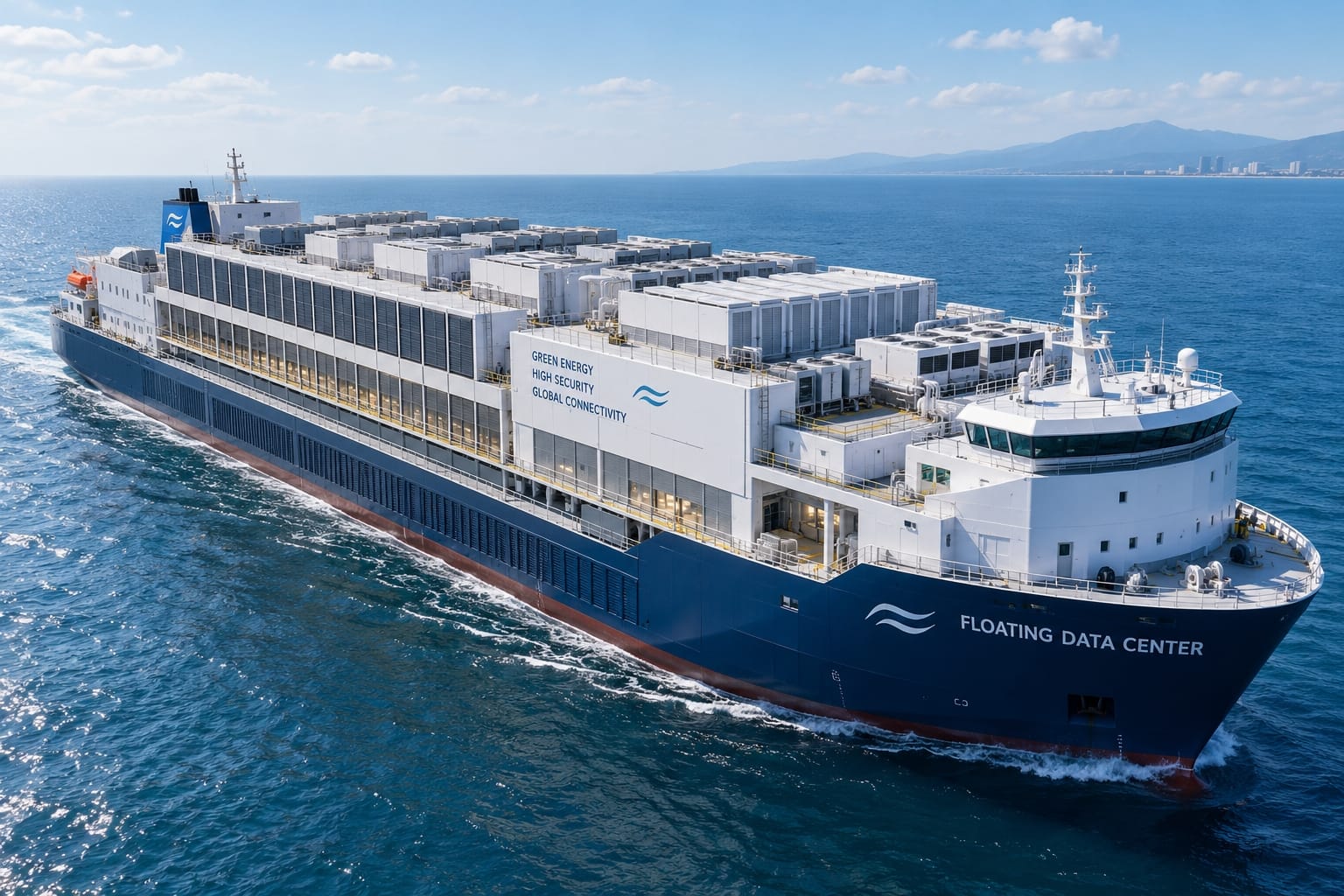
Land-based data centers have faced limitations including the burden of securing large sites and problems with power and cooling efficiency. By comparison, floating data centers (FDCs) are expected to use their offshore location to its full advantage and serve as an alternative to land-based data centers.
However, the FDC business remains at an early stage, its economic viability has not been verified, and significant safety concerns remain because international standards have not been established.
Surging data center investment accompanied by rising local opposition
According to an analysis by the Korea Data Center Council (KDCC) of materials from global consulting firms including PricewaterhouseCoopers (PwC), cumulative global data center capital expenditure is projected to reach $31.6 trillion, approximately 42,265 trillion won, from 2026 to 2050.
Annual global investment related to data centers is expected to more than double from $800 billion in 2026 to $1.8 trillion in 2050. The share accounted for by information and communications technology (ICT) equipment, including servers and GPUs, is expected to rise from 70% to 93%.
Recurring investment to replace equipment every 4 to 6 years is expected to drive market growth, but the actual locations of investment are expected to depend on power availability, semiconductor supply, data sovereignty and community consent.
Community acceptance, alongside securing electricity, is cited as a particularly significant obstacle to AI infrastructure investment. Research found that local opposition halted or delayed at least 75 data center projects worth approximately $130 billion in the United States in the first quarter of 2026.
Materials analyzed by telecommunications research and consulting firm Strabase show that a survey of 1,320 US adults conducted from June 16 to July 19, 2026, on support for or opposition to new data centers in their communities found opposition rose from 49% in March to 61% in July, an increase of approximately 12 percentage points over 4 months.
“The success or failure of data center investment is expected to depend not only on securing semiconductors, financing and electricity, but also on whether cost-sharing with communities over electricity bills, water use and tax incentives can be resolved,” Strabase said.
This is why FDCs, which operate offshore rather than on land, are attracting attention as a future data center model.
Features and advantages of floating data centers
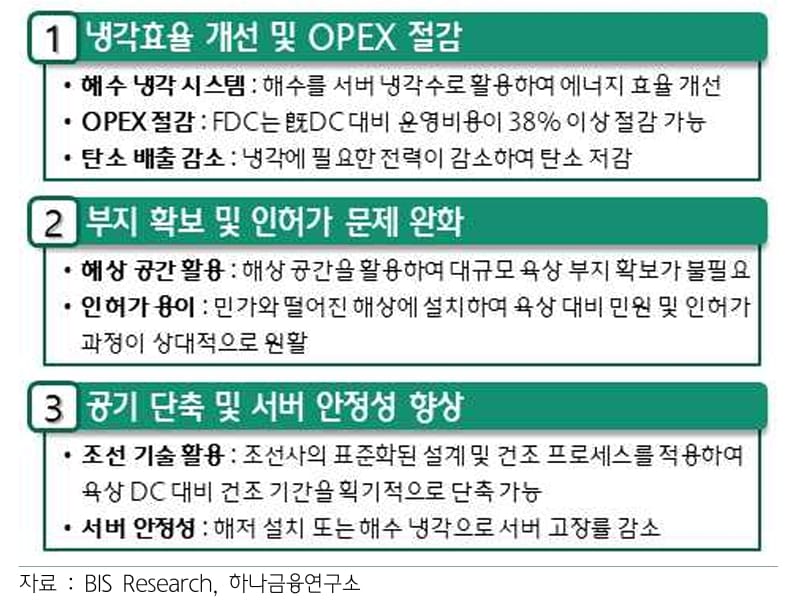
FDCs combine data centers with barges, vessels or offshore structures. As AI-related electricity demand rises, they are attracting attention as a promising business model because they face fewer land and permitting constraints, offer greater cooling efficiency and have shorter construction periods than land-based data centers.
According to Hana Bank’s Hana Institute of Finance, FDCs offer clear advantages over land-based data centers in securing electricity more quickly, improving cooling efficiency, providing room for site expansion, avoiding carbon, noise and waste-heat regulations, and allowing modules to be moved or removed easily.
However, disadvantages also need consideration, including stability at sea, maritime regulations under the Harbor Act, higher offshore construction costs and operational access.
“Because capabilities related to shipbuilding, including hull design, mooring stability, integration of power and cooling systems, and classification certification, are important for FDCs, the FDC business requires shipbuilders’ offshore infrastructure design and construction capabilities,” said Kim Jong-hyun, a researcher at Hana Bank’s Hana Institute of Finance.
Kim added: “Domestic and international shipbuilders view FDCs as an offshore data infrastructure engineering, procurement and construction (EPC) business and are attempting to diversify their business structures, which are centered on shipbuilding and exposed to substantial market volatility, by entering the FDC business.”
“FDCs are expected to generate greater added value than shipbuilding as a business involving advanced IT infrastructure construction and systems integration (SI),” Kim said. “Accordingly, Korean shipbuilders’ entry into the FDC business is expected to improve profitability.”
Diversifying into IT infrastructure through FDC projects
Domestic and international shipbuilders currently participate in FDC projects in two main ways: shipyards work with data center developers to convert barges, vessels or floating structures, or shipbuilders partner with data center developers to begin new construction.
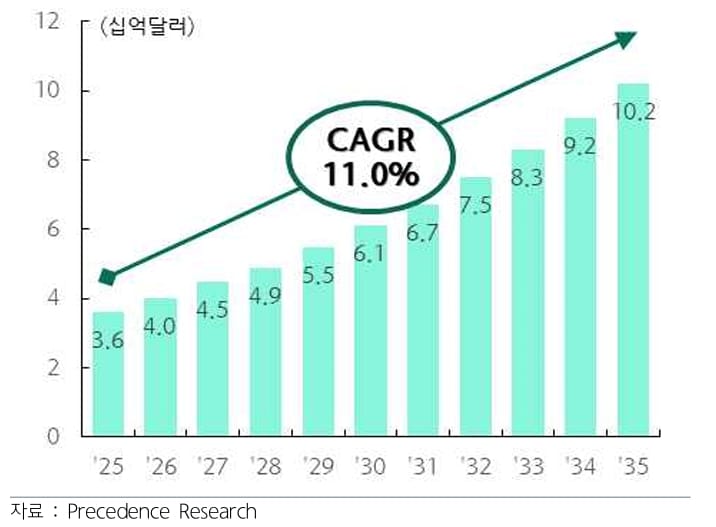
In particular, the global FDC market is expected to continue growing steadily as the expansion of the AI industry increases demand for data centers. Domestic and international shipbuilders are seeking to become IT infrastructure companies by expanding their FDC businesses with major technology companies.
“In Korea, Samsung Heavy Industries is positioning itself as an FDC developer, while Hanwha Ocean and HD Korea Shipbuilding & Offshore Engineering are positioning themselves as suppliers of data center power infrastructure,” Kim explained. “They are pursuing participation in global FDC projects by signing memorandums of understanding and supply contracts with major technology companies and data center developers.”
Kim added: “Rather than converting an existing vessel, Samsung Heavy Industries developed its own model of a 50 MW floating platform dedicated to data centers and obtained certification from the US classification society ABS.”
There is also a view that, as the AI era develops, the next competitive challenge for data centers is shifting from where to install servers to where electricity, cooling and land can all be secured together.
“Marine data centers are a model that complements land-based data centers rather than replaces them,” the Korea Data Center Council said. “This trend is a clear indication of how rapidly the power, cooling and location bottlenecks triggered by AI are changing the geography of global digital infrastructure.”
Original Korean article: ER Economic Review
English brief by Korea Wind Intelligence, koreawindintel.com

















