

Dispute over advance payment
With the Democratic Party winning the US midterm elections and signaling tighter regulation of artificial intelligence (AI) data centers, a heated dispute has emerged over an advance payment of up to $10 billion, approximately 13.6 trillion won, for South Korea-US nuclear power investment.
Concerns are growing over whether it is appropriate to commit such substantial funds in advance if restrictions are imposed on data center projects, a major source of electricity demand.
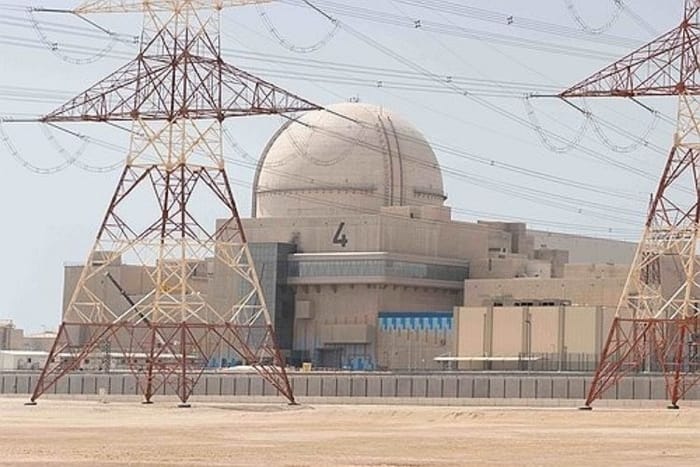
According to the relevant authorities on November 7, the disputed $10 billion nuclear investment advance is funding to secure long-lead items, key nuclear power equipment that takes years to design and deliver.
Major equipment can take more than five years to procure, including reactor vessels at 54 months, steam generators at 57 months, and reactor coolant pumps and motors at 65 months. Authorities explain that failing to commit advance procurement payments could seriously delay the overall construction schedule.
Nuclear construction framework
The two countries previously agreed on October 1 to a South Korea-US nuclear power framework to build eight large nuclear reactors in the continental United States.
The large-scale project would receive $120 billion, or 60% of the total $200 billion investment fund for the United States. The countries outlined a plan to begin construction of two US Westinghouse AP1000 reactors, pursue construction contracts within six months for two Korean APR1400 reactors and two US reactors, and subsequently build two additional AP1000 reactors.
At the time, US Commerce Secretary Howard Lutnick cited Ohio, Tennessee, South Carolina and Kentucky among possible nuclear plant locations. However, Democrats won in Ohio and South Carolina in this election.
In particular, the Democratic Party is preparing to tighten restrictions on AI data center construction, citing grid overload, sharp increases in residents' electricity charges and water shortages, increasing uncertainty over the projects.
Critics say that if construction of new data centers, the key customers expected to consume the nuclear plants' substantial output, contracts, the plants could be completed without sufficient buyers for their electricity, undermining the projects' basic premise.
Calls for a hold and the ministry's response
Political opposition has already emerged.
Seo Wang-jin, a lawmaker from the Rebuilding Korea Party, held a press conference at the National Assembly on November 5, saying: “The conditions for nuclear investment have changed rapidly with the US Democratic Party's control of the Senate and House of Representatives.” Seo urged that “the $10 billion advance payment must be put on hold immediately.”
By contrast, the responsible ministry, the Ministry of Trade, Industry and Energy, maintains that moves to tighten AI data center regulation are not necessarily entirely negative for nuclear power projects.
A ministry official countered: “Local residents' opposition stems from concerns that electricity charges will rise when only power-intensive data centers are built without expanding electricity infrastructure. If large-scale generation sources such as nuclear plants are built alongside them to provide a stable electricity supply, this could instead ease upward pressure on local electricity charges and improve acceptance of data centers.”
The official added: “The US side agreed to notify us of specific candidate nuclear plant sites after the midterm elections. Once the candidate sites are determined, we intend to respond by closely examining whether they can connect to existing transmission infrastructure and whether there are stable customers, such as major technology companies, that would sign long-term power purchase agreements.”
Original Korean article: Maeil Business
English brief by Korea Wind Intelligence, koreawindintel.com

















