

As the AI and semiconductor industries grow, small, high-density data centers are emerging in the Seoul metropolitan area because of shortages of power and land, while megascale data centers are emerging in other regions with more plentiful land and favorable power supply conditions.
According to the Korea Data Center Council on October 26, the number of domestic data centers increased approximately 3.5-fold, from 52 in 2000 to 182 in 2025. New facilities are planned or being pursued at 72 sites nationwide. Revenue in the private commercial data center market totaled KRW 6.22 trillion in 2024 and is expected to grow by more than 12% annually through 2029.
Competition among construction companies for orders has also intensified. An analysis of their semiannual reports found that seven major construction companies recorded a combined KRW 6.2042 trillion in data center construction orders in the first half of 2026.
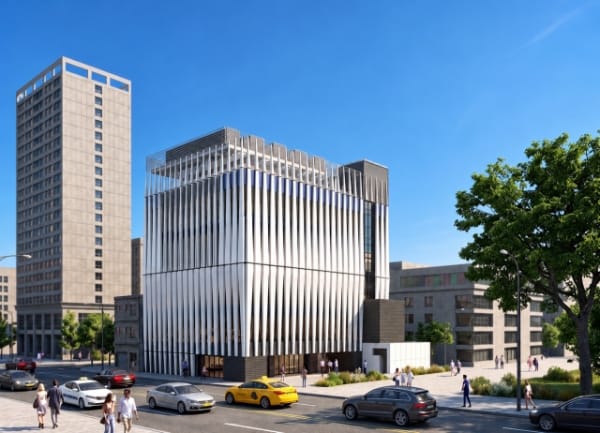
Hyundai Engineering & Construction recorded the largest amount at KRW 1.781 trillion, followed by Samsung C&T's construction division at KRW 1.2562 trillion and SK ecoplant at KRW 1.0212 trillion. Next were DL E&C at KRW 657.9 billion, POSCO E&C at KRW 656.3 billion, Hanwha's construction division at KRW 579.1 billion and Daewoo E&C at KRW 252.5 billion.
Power supply difficulties in the metropolitan area bring edge data centers below 10 MW into focus
The biggest obstacles to data center development in the Seoul metropolitan area are shortages of power and land. Major cloud companies, financial institutions and corporate customers are concentrated there, making metropolitan locations attractive to data center tenants and investors. However, sites for large facilities are scarce, and power supply conditions are constrained.
According to CBRE Korea, 522 applications for initial technical reviews under power grid impact assessments for metropolitan data centers were submitted between August 2024 and March 2026, representing a total requested capacity of 33,592 MW.
Of these, 279 were found ineligible for power supply. Among the 243 applications that passed the initial review, only 24 projects advanced to the main assessment. Just 10 projects, totaling 1,010 MW, received final approval for power supply.
Final approvals represented approximately 1.9% of all applications. However, because the figures include projects still under review, this cannot be taken as an individual project's actual probability of approval.
These constraints are making small, high-density edge data centers below 10 MW, which are exempt from power grid impact assessments, an emerging alternative in the metropolitan area. Developers are also converting existing logistics centers and office facilities into data centers.
CJ Logistics' construction division is carrying out work to convert a logistics center in Pungsan-dong, Hanam, Gyeonggi Province, into an edge data center below 10 MW. It secured approximately KRW 162 billion in full project finance in July 2026 and is understood to be proceeding with demolition, fire protection and electrical work.
Seohan also recently won the contract to build the Samseong Station edge AI data center in Daechi-dong, Gangnam-gu, Seoul. The contract covers both building construction and mechanical, electrical and plumbing work, which constitutes core data center infrastructure.
Edge data centers process data close to users. Because response latency and network connectivity are important for AI inference services, locations close to major facilities operated by cloud service providers, telecommunications companies and content delivery network operators offer advantages.
AI startups and financial institutions are currently among the main customers for edge data centers. As corporate adoption of AI expands, these facilities are expected to play a larger role in meeting enterprise AI demand.
However, existing small data centers cannot necessarily be used immediately as edge data centers. Although many older facilities are below 10 MW, some lack the power density per rack, measured in kW/rack, and cooling infrastructure required to operate high-performance AI servers.
Based on development projects currently being pursued, data center supply in the metropolitan area is expected to reach approximately 4 GW in 2028. However, the sharp decline in new permits following the introduction of power grid impact assessments could cause subsequent supply growth to stagnate.
Regions pursue GW-scale data centers, with anchor tenants crucial
Outside the metropolitan area, megascale AI data center developments are being pursued. Land is easier to secure, and areas close to power generation facilities have relatively greater capacity to accommodate large electricity demand.
The government's distributed energy policy and its pursuit of three megaprojects are also supporting regional data center development. GS Group's planned AI data center is to be located in Donghae, Gangwon Province, with a proposal to develop a total capacity of 2.4 GW in two phases.
Building a data center outside the metropolitan area does not, however, guarantee commercial viability. With major domestic cloud companies and large customers concentrated in the metropolitan area, regional facilities can face increased response latency and telecommunications circuit costs because of their distance from customers.
Access to specialist operating personnel and ease of maintenance must also be considered. Residents sometimes raise concerns about noise, heat discharge and electromagnetic fields or oppose the construction of large transmission lines and substations, making community acceptance another major challenge.
In particular, as the cost of installing large electrical and cooling systems and rising construction material prices put pressure on profitability, securing tenants is directly linked to financing.
Industry participants therefore consider securing large anchor tenants essential to developing and operating regional data centers successfully.
Under these conditions, regional development and financing models based on demand from major tenants are taking shape. Build-to-suit development, which constructs facilities to meet a specific user's requirements, is also attracting attention as an alternative to colocation, which leases space and equipment to multiple companies.
For example, the Pohang AI data center in North Gyeongsang Province secured a pre-lease commitment from NHN Cloud for 16 MW of IT space, followed by a KRW 450 billion project finance agreement in September 2026. The total project cost is KRW 600 billion, with Hyundai Engineering & Construction handling construction and completion targeted for the end of 2027.
In Gunsan, North Jeolla Province, SGC Energy increased the first-phase capacity of its data center from 40 MW to 60 MW following discussions with a global big tech customer. This is an example of development capacity being adjusted to a specific user's demand. SGC Energy is also pursuing a business model linking its own generation facilities with the data center.
Links between power generation and data centers are also taking shape. In April 2026, Naver signed a 25-year direct renewable power purchase agreement with GS Wind Power and agreed to acquire a 30% stake in the generation company. Electricity from the plant is scheduled to be supplied to data centers in Sejong and Chuncheon, among others, from 2028.
Original Korean article: Opinion News
English brief by Korea Wind Intelligence, koreawindintel.com

















