Neither choice is easy. Reducing greenhouse gases requires an energy transition. But renewable energy does not guarantee the ecological value of the places where it is built. Can development undertaken to protect the climate also protect the lives that inhabit those seas? This article examines the issues surrounding an offshore wind project being revived in the waters off Daejeong-eup, Seogwipo, Jeju.
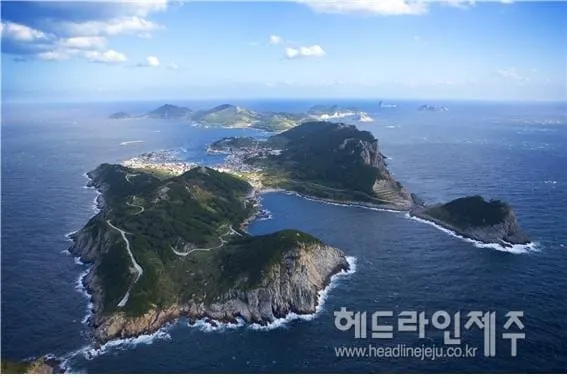
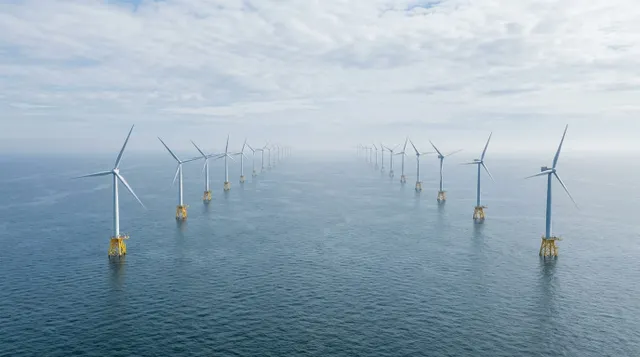
Daejeong is being pursued by a special purpose vehicle in which KOSPO (Korea Southern Power) is a major shareholder. The plan is to install 18 turbines rated at 5.56MW each across 5.9 square kilometers of sea off Daejeong-eup, Seogwipo, to create a 100MW facility.
The project had been in limbo after the Jeju Provincial Council rejected the development zone designation in 2020, citing insufficient community acceptance. In 2025, the developer moved to restart it. In May 2026, the Jeju Wind Power Project Review Committee passed the wind power development zone designation plan as originally proposed, entering the restart procedure.
The offshore wind developer said the reason for restarting the project was that "the importance of energy independence has grown due to Middle East tensions, and we have reconfirmed our commitment after securing support from more than half of the residents of Dongil 1-ri, the project site." The developer also said it had formed good relations with Mosulpo Fisheries Cooperative, which had initially opposed the project, and announced plans to establish a 10 billion won fund for all Jeju residents.
By contrast, the Daejeong Aquaculture Association and the marine environmental group Hot Pink Dolphins have raised concerns about impacts on aquaculture environments, marine ecosystems, and dolphin habitats, presenting opposing views.
Dolphins and the sea six kilometers away
Let us focus on the dolphins that concern us. About six kilometers from the Daejeong development zone, there is a marine protected area off Sindo-ri, Daejeong-eup. It was designated in 2025 to systematically conserve the habitat of Indo-Pacific bottlenose dolphins. Could facilities built at such a distance from the marine protected area affect the dolphins' home?
In her 2021 doctoral thesis, Dr. Jang Su-jin analyzed the behavior and spatial use of dolphins along Jeju's coast. Pods feeding were found at an average of about 366 meters from the shore, while resting pods were about 395 meters away. This confirmed that the waters off Daejeong-eup are a sea area that Indo-Pacific bottlenose dolphins use repeatedly and frequently.
However, these numbers should not be read as the boundary of their habitat. The data came from daytime observations from land and did not capture use of deeper waters or nighttime activity. It must also be separately confirmed how much the old observation results overlap with the current project site.
One fact is clear: in the sea visible to human eyes, dolphins eat and rest. The importance of a sea cannot be judged by distance alone.
The one-kilometer rule and what it does not tell us
Jeju's offshore wind licensing standards contain a unique "coastal setback" regulation. The "detailed application standards" based on the Jeju Wind Power Project Ordinance require turbines to be installed at least one kilometer from the cadastral line. Of course, meeting this line does not automatically approve the project. Environmental and ecosystem requirements are reviewed separately. Technical alternatives are also required to reduce impacts on legally protected species.
However, this one-kilometer standard was not drawn for dolphins. It is merely an administrative standard for determining project location, not a figure presented as the point where dolphin habitat ends or where noise disappears into a safety zone.
That said, there is no basis to conclude that the one-kilometer standard is insufficient. Even if turbines stand one kilometer offshore, separate investigation is needed into what impact construction noise and vessel traffic have on the nearer coastal waters. The turbine layout, construction methods, sound transmission conditions, and dolphin spatial use must be examined together.
Building turbines at sea cannot be explained by "noise" alone. Underwater foundation work, turbine operation, and vessels deployed for construction and maintenance each produce different "sounds."
What research from Europe shows
The field that has been extensively researched in Europe, where offshore wind development is active, is "pile driving." When large hammers drive steel columns to the seabed to support turbines, strong impact noise spreads through the water. A 2018 study analyzing construction at seven German offshore wind farms found that the louder the construction noise and the closer to the work site, the less time harbour porpoises were detected acoustically. In this study, impacts were confirmed up to 17 kilometers from the construction site.
Harbour porpoises are a different species from Jeju's Indo-Pacific bottlenose dolphins. They are classified as cousins of the finless porpoise, the "smiling dolphin." Because water depth, seabed geology, construction methods, and sound transmission conditions differ, the impact distances from overseas studies cannot be directly transferred to a Jeju map.
The Daejeong offshore wind developer explained to the Jeju Wind Power Project Review Committee that "using RCD construction methods reduces underwater noise by more than 50 decibels, and there is almost no impact beyond 115 meters from the excavation site."
RCD is a construction method that drills holes in the seabed to create foundations instead of hammering columns in. The explanation that it is quieter than impact methods has merit. But predictions are only predictions. What must be confirmed in Jeju is not the largest noise figures from overseas, but the predicted values of the actual construction methods to be used and measured values from the site.
A 2021 study analyzing two Scottish offshore wind farms examined both pile driving and construction vessel activity together. Harbour porpoise occurrence indicators in the impact zone decreased by 8 to 17 percent compared to baseline periods. Avoidance was observed up to 12 kilometers from pile driving and up to 4 kilometers from construction vessels. This study offers an important insight: managing only the loudest noise cannot explain the impact of construction as a whole.
The sea does not become quiet when pile driving ends. While turbines operate, mechanical vibration travels down the tower and spreads into the water. It is not as loud as during construction, but it continues for as long as the turbine stands.
Domestic research has also measured this sound. Researchers at Hanyang University placed a microphone in the water about 70 meters from a 3MW turbine at the Southwest Offshore Wind facility and recorded sound for about ten days. As blade rotation speed changed, the pitch and intensity of the sound changed as well. When wind strengthened and blades rotated at maximum speed, low-frequency sound around 198Hz increased to about 20 decibels. Most sound was concentrated in low frequencies below several hundred hertz. Tower vibration, wind speed, rotation speed, and underwater sound moved in nearly the same direction, and the researchers interpreted the vibration generated by blade rotation as leading to underwater sound.
However, this research only reveals the nature of the sound. It is not a study of dolphins, and the authors acknowledged the limitation that they measured one 3MW turbine in one sea area. The paper notes that reports show operational noise increases as turbines grow larger. What can be confirmed in operational noise research is "what sound is produced," and what remains unclear is "what impact that sound has on dolphins." This is why measuring noise cannot immediately be read as damage, and why smaller noise than construction noise cannot be concluded as harmless. For this reason, the Daejeong offshore wind project must actually measure underwater noise not only during construction but also during operation, and must also examine dolphin responses.
Coexistence or continuity of life
To summarize: there is no basis for saying that all dolphins will leave when offshore wind is built. Conversely, the mere fact that dolphins are found near turbines does not confirm coexistence.
What matters is whether the life of feeding, resting, and raising young in that sea continues.
What must first be confirmed in the waters off Daejeong is exactly this. Seasonal feeding activity, rest periods, and data on mother and calf use of dolphins must be overlaid on the turbine layout map. The impact of vessels going to and from construction and maintenance sites, added to existing tourist boat and fishing vessel traffic, must also be examined together.
Surveys must continue before, during, and after construction using the same methods. Comparison sea areas and seasonal changes must be examined together, and if acoustic detection changes, it must be determined whether this reflects changes in dolphin use or changes in vocalization or detection conditions. Only then can the impact of development be identified and the effectiveness of countermeasures be judged.
The explanations that the developer and Jeju must provide must be specific. Why this location, how were other sites and layouts compared, and if noise or behavioral changes different from predictions appear, what standards will be used to adjust or halt construction.
Responding to the climate crisis requires energy transition. But urgency does not justify every location. Whether a place good for converting wind into electricity can also protect dolphin life must be separately confirmed. That question must begin not after turbines are erected, but when deciding where to place them.
Original Korean article: news.kbs.co.kr
English brief by Korea Wind Intelligence, koreawindintel.com
KWI project profile — Daejeong Offshore WindCompiled from the KWI database. Not part of the source article.
| - |
Project data: KWI database — Electricity Business Licence records, and Electricity Regulatory Commission minutes.