

Data center opposition in Texas
As rapid growth in the artificial intelligence (AI) industry drives the expansion of data center construction worldwide, residents' opposition is also growing over substantial electricity and water consumption and environmental issues.
In an upset in Texas, Democratic candidate Gina Hinojosa, who campaigned on regulating data centers, defeated incumbent Governor Greg Abbott in the November 3 midterm election, local time, to become governor-elect. Texas has traditionally been considered a Republican stronghold.
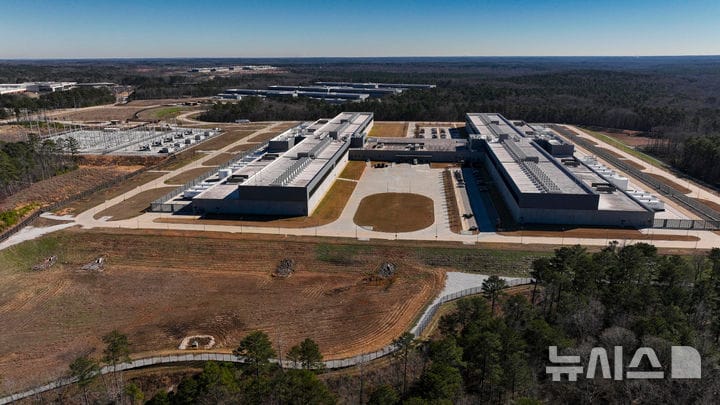
Data centers were among the issues attracting attention in the election. Hinojosa pledged to temporarily halt new data center construction and restrict development until regulations protecting residents were in place. Hinojosa cited the burden that data centers' substantial electricity and water consumption places on local communities and residents' exclusion from decisions about whether development should proceed.
Texas has actively sought data center investment on the strength of inexpensive land, abundant energy resources and business-friendly policies. About 25% of planned data center capacity in the United States is expected to be concentrated in Texas.
However, as data centers have driven a sharp increase in electricity demand, residents' concerns have also grown over higher household electricity bills, water consumption and damage to ecosystems.
In a November 5 interview with CNN, Governor-elect Hinojosa said, "We will create legislation to protect Texans, and data center-related activities need to stop until those protections are in place."
Preliminary assessment of Wonder Valley
Conflicts over data centers are not limited to Texas. In Canada, a proposed data center intended to be the world's largest has become the subject of dispute over substantial waste heat and carbon emissions.
Canadian public broadcaster CBC reported on November 1 that Robert Davies, a physicist at Utah State University in the United States, had warned that the proposed Wonder Valley data center in Alberta, Canada, could generate energy equivalent to 23 Hiroshima atomic bombs every day.
The project, led by prominent investor Kevin O'Leary, is a large-scale development plan involving an investment of $70 billion, approximately 94.92 trillion won, on a site of about 64 square kilometers, approximately 19,360,000 pyeong. First unveiled in 2024, it is expected to become the world's largest data center when all development phases are complete.
Davies conducted a preliminary technical assessment of the project at the request of the Sturgeon Lake Cree Nation (SLCN), an Indigenous community in Canada.
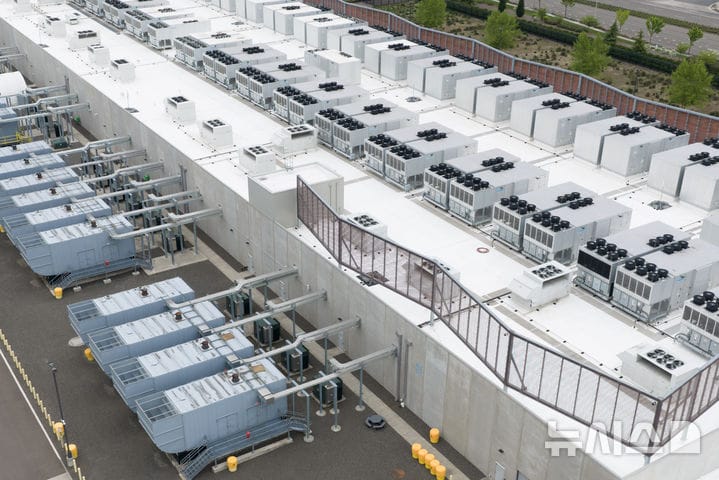
Davies concluded that, once operating, the data center could release energy equivalent to 23 atomic bombs every day.
"Of course, this does not mean an explosion. It is simply an attempt to make the scale of the energy we are discussing easier to understand," Davies said. Davies added, "The impacts will be considerable and could potentially be extreme."
Davies estimated that the facility would emit about 30 million tonnes of carbon dioxide annually once fully operational. That would exceed 4% of Canada's total carbon emissions.
However, the analysis is a preliminary technical assessment based on publicly available information, and the figures in the report are initial estimates that must be verified using developer data.
Environmental assessment dispute
SLCN has sought judicial review, saying the project, proposed for its traditional territory, was even exempted from an environmental impact assessment. Davies also argued, "A project of this scale is a case that requires an environmental impact assessment."
Alberta's environmental authorities, however, said the project uses established electricity and water systems and is not subject to an environmental impact assessment. They explained that the developer must still obtain technical assessments of impacts on air, land and water quality, along with the necessary permits and approvals.
The developer, O'Leary Digital, also said it respects the regulatory process and will continue consultations with Indigenous communities.
Original Korean article: Newsis
English brief by Korea Wind Intelligence, koreawindintel.com

















