As the government accelerates the expansion of renewable energy, securing community consent for power generation facilities has emerged as the biggest obstacle. Local opposition to power plants has frequently led to project delays. As a solution, resident participation models such as Sunshine Income Villages and Wind Income initiatives, which share generation revenues with residents, are drawing attention, and support from the government and local authorities is expanding.
President Lee Jae-myung demonstrated his commitment to an energy transition in a policy speech on next year's budget on November 2, 2026. The president stated, "We will invest 2.8 trillion won in expanding renewable energy and increase the electric vehicle subsidy target to 430,000 units, the largest in history," clearly laying out a policy of large-scale financial investment in eco-friendly energy supply.
Kim Sung-hwan, Minister of Climate, Energy and Environment, also presented at a state audit in October 2026 the goal of achieving 100 gigawatts of renewable energy early by 2030. The minister said, "We will implement a harmonious energy mix to support a great leap forward like a mega-project. We will eliminate bottlenecks in renewable energy expansion."
As the push to foster renewable energy strengthens, calls are growing to address major barriers surrounding it. In particular, securing community consent is identified as a key task. Residents concerned about landscape and residential environment damage and environmental impacts from installing solar and wind power facilities may oppose projects, causing delays.
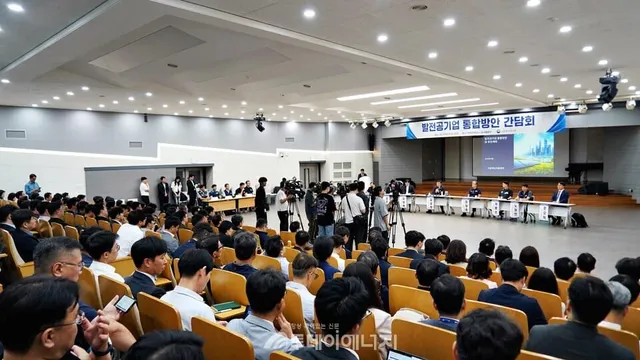
In some regions, conflicts have emerged as residents form opposition committees or take collective action against power facility development. A resident participation model is drawing attention as a promising alternative to resolve this. When local residents directly participate in power generation projects and share revenues, opposition to the projects can be reduced and support can be secured.
A report released by the Bank of Korea last year on "Measures for the Development of Sustainable Resident Participation Renewable Energy Projects" also analyzed that direct resident participation in projects can help reduce community opposition.
Sunshine Income Villages and Wind Income
The government and local authorities recognize the necessity and are providing policy support. A prime example is the Sunshine Income Village. A Sunshine Income Village is an energy self-sufficiency model where residents install and operate solar power facilities on unused village land and return revenues to welfare and income.
The government assists selected villages with guidance on licensing procedures such as electricity business licensing, financial support covering up to 85 percent of installation costs, securing project sites, and grid connection. Results are becoming visible. In Guyang-ri, Yeoju, a cooperative installed a 1 megawatt power generation facility in 2024 and is now generating approximately 10 million won in net monthly revenue. The revenue is used for welfare projects such as operating a happiness bus and providing free meals at the village community center, as well as resident dividends.
As resident benefits materialize, project expansion is accelerating. The Ministry of the Interior and Safety launched the project in March with a goal of selecting over 500 villages this year, but later expanded the target to 700 villages to reflect project demand.
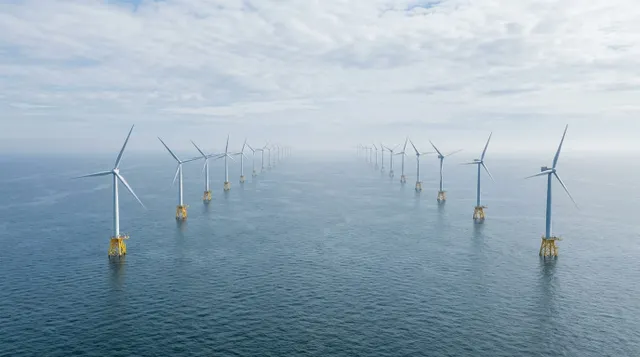
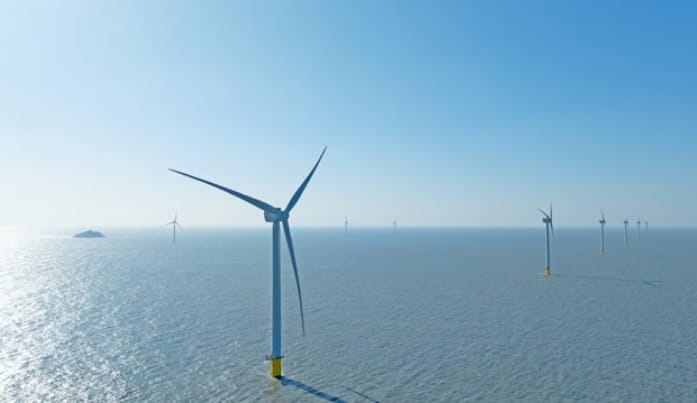
Wind Income, which shares wind power generation revenues with the community, is also drawing attention. The core of the coexistence model is returning part of the revenues generated from onshore and offshore wind power projects to residents.
Currently, profit-sharing projects are being pursued centered on local authorities, with Sinan County in South Jeolla Province playing a pioneering role. At Jeonnam P1 - SK E&S, which began commercial operation in May last year, approximately 5.5 billion won in profit-sharing revenue was generated over one year through the second quarter of this year.
Based on existing project experience, the government plans to begin full-scale expansion of Wind Income Villages from next year. There are still many challenges to resolve before the business model stabilizes. The industry believes that sufficient community consent must be secured from the initial stages of projects and systems must be designed so that generation revenues are distributed evenly to the community. Expanding the grid is also important. To sustain residents' revenue base, adequate power grid infrastructure must be in place.
Original Korean article: Sidae
English brief by Korea Wind Intelligence, koreawindintel.com