This is Korea Offshore Wind Intelligence, a brand new site by Korea Offshore Wind Intelligence that's just getting started. Things will be up and running here shortly, but you can subscribe in the meantime if you'd like to stay up to date and receive emails when new content is published!
POSCO E&C achieved operating profit of 97.4 billion won in H1 2026 through cost management, but recorded zero new contracts in nuclear, hydrogen, and offshore wind despite organizational restructuring.
A Korean opinion piece examines growing community conflict over offshore wind projects, exemplified by the Dadaepo case, where residents and fishermen hold divergent views on economic benefits versus impacts on livelihoods and marine environments.
Jeonnam P1, South Korea's first privately-led offshore wind farm, achieved commercial operation in May 2025 and completion in December 2025, operating at 97% availability with a 30%+ capacity factor.
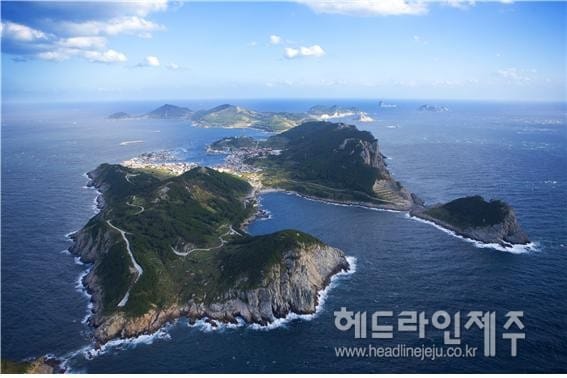
Ocean Winds Korea's 1,125 MW offshore wind project in Incheon's Gulup-do area encountered continued opposition from local fishermen and residents at an environmental impact assessment public hearing.
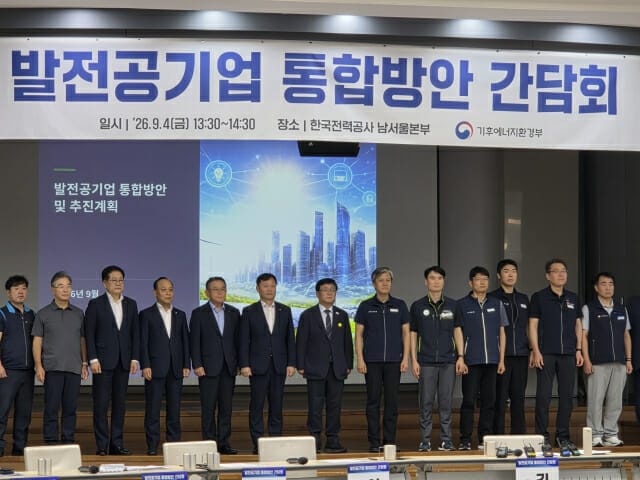
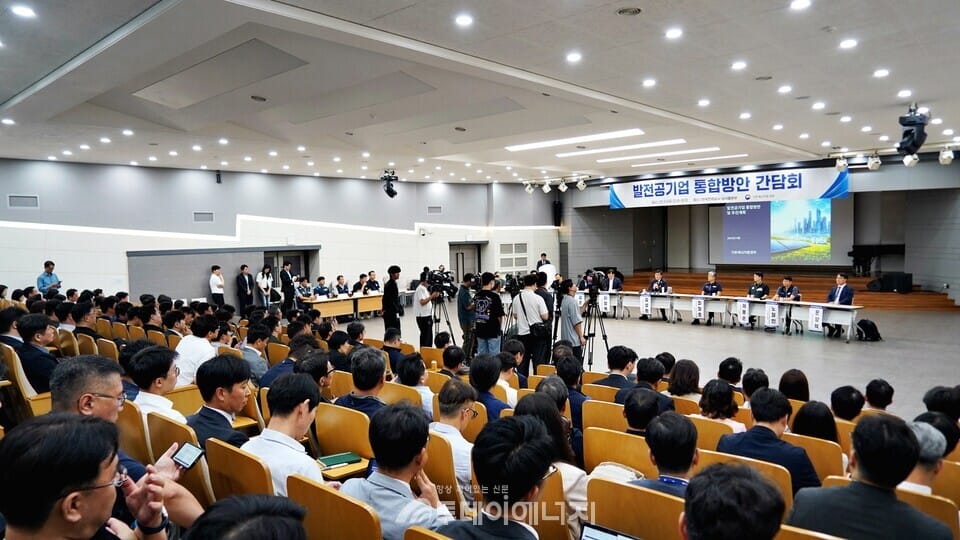
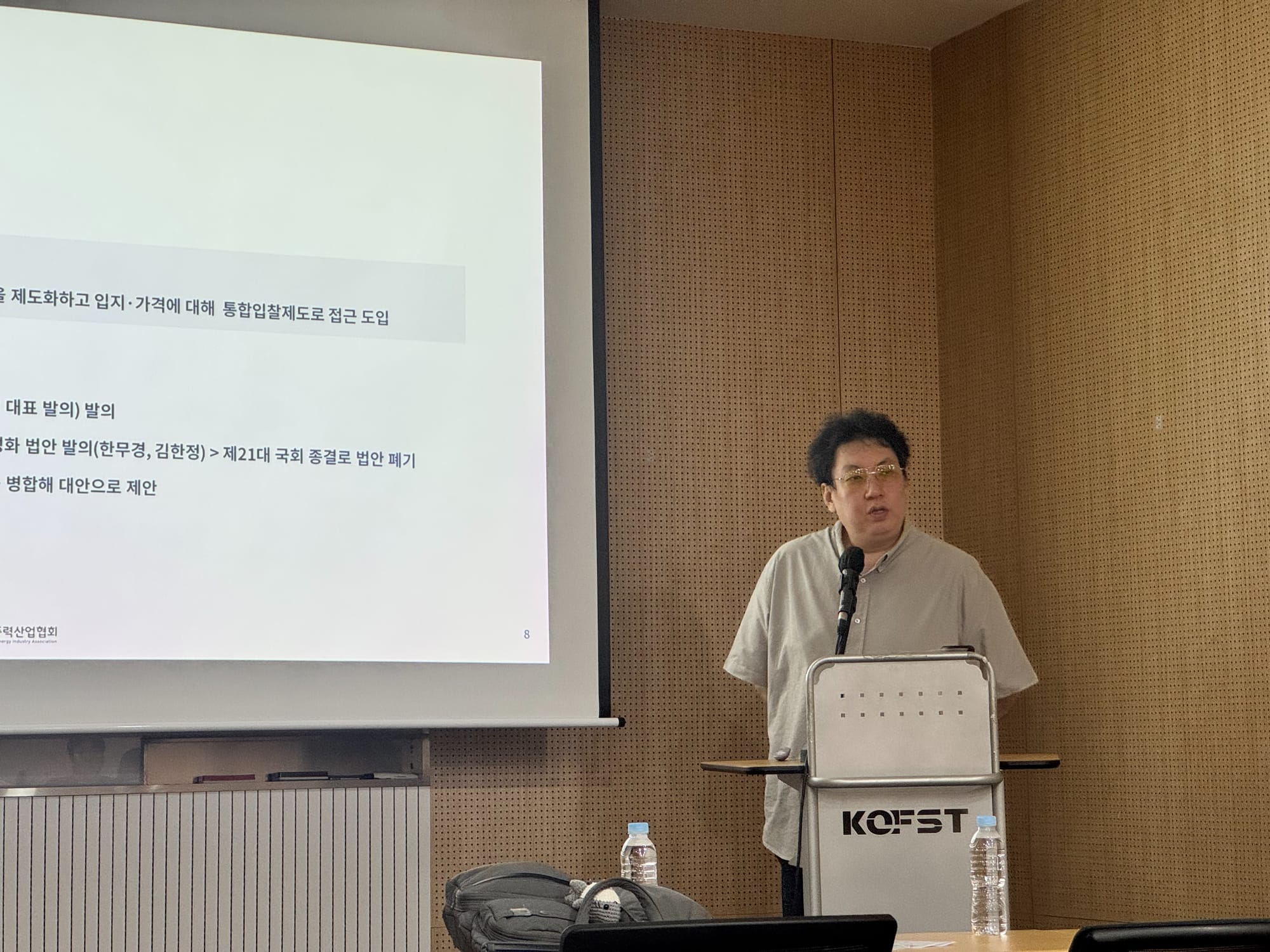
South Korea's government has decided to consolidate five state-owned power generators (Korea East-West Power, Korea Midwestern Power, Korea Western Power, Korea Southern Power, and Korea Southeastern Power) into a single entity called 'Korea Generation' after 25 years of operating separately.
Korea's five state-owned generators become one in October 2027. They hold 14.0 GW of offshore wind, a third of the national pipeline. What the merger case rests on, and what it leaves unanswered.
The Ministry of Climate, Energy and Environment's ten-year bidding plan, announced on 30 June 2026, will bring 55 GW of offshore-wind tenders to market from 2026 to 2035. It allocates 4 GW or more each year and concentrates about 28 GW into 2026–2030. Two tracks run in parallel — the existing competitive auctions (~31 GW, through 2033) and the Special Act's new development-district auctions starting in the second half of 2029 (~24 GW) — targeting 10.5 GW deployed or under construction by 2030 and 25 GW of cumulative deployment by 2035.
Special Act on Offshore Wind Deployment
The framework law that moved Korea from developer-led projects to a government-led planned-siting regime, in force since 26 March 2026 with its Decree and Rules. The state designates the wind-power districts and selects operators by competitive bidding, and a single implementation-plan approval deems roughly 28 statutory authorizations granted — the one-stop reform at the centre of the market.