

AI data center stocks plunged after Democrats won control of the Senate and House of Representatives in the US midterm elections. On November 5, local time, the Nasdaq fell 5.5%, while CoreWeave dropped about 10%. Shares in neocloud companies including Nebius and IREN also fell sharply. About $2.5 trillion in market capitalization disappeared from the Nasdaq 100 in a single day. Concerns about data center regulation were compounded by corporate debt burdens and doubts about investment profitability.
The market is focusing on the possibility that the Democratic victory will lead to tighter data center regulation. If conflicts over electricity and water use and burdens on local communities intensify, permitting and construction costs for new facilities could also rise.
That does not necessarily mean AI industry growth has weakened. The technological rivalry between the United States and China continues, and increasingly sophisticated AI models inevitably require more computing resources and electricity to support them.
What is changing is the approach to investment. The market is moving away from aggressive expansion in which companies secured GPUs first and sought customers afterward, and toward assessing actual demand and profitability. Investors are beginning to distinguish between stronger and weaker businesses in the AI data center market.
CoreWeave, SK and Naver have different investment structures
A notable aspect of this share price decline is that investment structures and financial conditions differ among data center developers.
Specialist neocloud companies such as CoreWeave acquire GPUs on a large scale and rent them to AI companies. This is advantageous in a growing market, but the burden increases if customer acquisition is delayed or financing costs rise. That is why debt of approximately $50 billion is adding to concerns.
By contrast, SK (034730) and Naver (NAVER (035420)) are expanding AI infrastructure on the basis of existing businesses such as semiconductors and telecommunications, and search, advertising and commerce. They share the investment burden by combining revenue and cash flow from existing businesses with funding from global investors.
SK has a business base spanning semiconductors, telecommunications networks and data centers. SK hynix's competitiveness in high-bandwidth memory (HBM) is another differentiating factor. An increase in AI data centers raises demand not only for GPUs but also for HBM, which processes large volumes of data quickly.
SK's data center business is divided between operating and expanding existing facilities and developing new ones. SK Horizon is responsible for securing, operating and expanding a total of 318 MW of infrastructure, encompassing facilities already operating and data centers under construction. SK Telecom (017670) has secured approximately 3.08 trillion won from a KKR and IMM consortium. Once the transaction closes, SK Telecom will hold 51%, with KKR and IMM holding 29% and 20%, respectively.
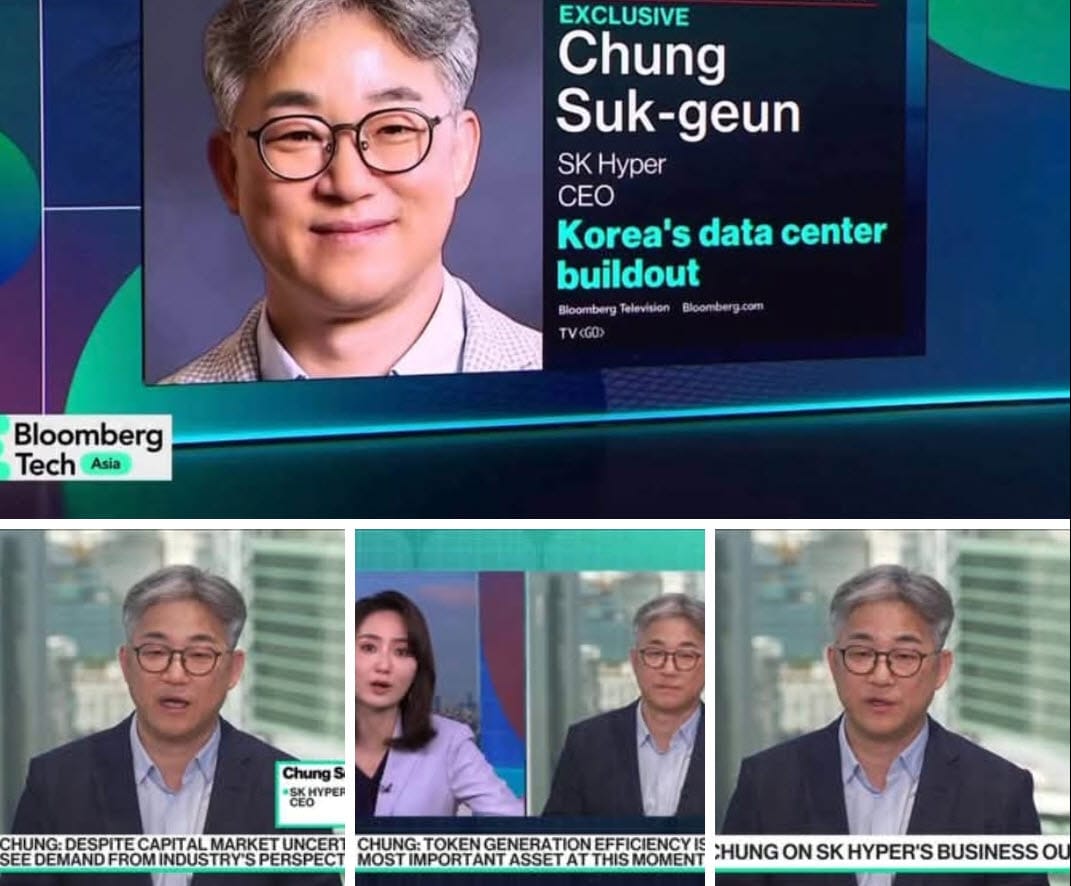
New development is handled by SK Hyper, established as a wholly owned subsidiary of SK Telecom. Its goal is to build up to 15 GW of AI data centers by 2035. It plans to begin operating the first phase, comprising 5 GW, from 2029.
In a Bloomberg TV interview, SK Hyper chief executive Jung Seok-geun estimated the cost of building the first 5 GW, including servers and equipment, at approximately $350 billion, or about 464 trillion won. This is the cost of the first phase, not the entire 15 GW. SK Telecom plans to contribute up to 750 billion won by 2030 and raise the remainder through global big tech companies and financial investors, among others. The idea is for tenants and investors to share costs and adjust the pace of investment to actual demand.
Naver is also sharing the investment burden. Brookfield will invest up to $9 billion to secure AI infrastructure, including GPUs and data centers, while Naver Cloud will use it under a long-term contract. Naver has decided to link usage fees to business revenue to reduce the initial investment burden. However, it guarantees payments for up to eight years in case Naver Cloud is unable to pay the infrastructure usage fees.
What the two companies have in common is that they are not building large-scale infrastructure solely with their own funds. Their strategy is to share investment risk through cooperation with global financial investors and expand their businesses in line with actual demand.
SpaceX also expands into AI infrastructure

Neocloud companies are not the only businesses entering the AI infrastructure market. Some companies are using capital and technology secured through existing businesses to develop AI computing into a new source of growth.
SpaceX, which grew through rocket launches and its Starlink satellite communications business, is a prominent example. According to its third-quarter earnings materials, revenue from its Super Intelligence business division was approximately $7.6 billion, accounting for 52% of total revenue. This division includes cloud service contracts, the effects of the Cursor acquisition, and revenue from Grok models and software. SpaceX's business, previously concentrated in space and satellites, is expanding into AI infrastructure and software.
It signed a cloud services contract with Anthropic providing access to approximately 325,000 Nvidia GPUs. As AI companies find it increasingly difficult to secure the computing resources they need solely through their own data centers, the role of external developers in supplying GPUs is also growing.
However, acquiring GPUs alone does not ensure business success. Heavy revenue dependence on a particular large customer means that contract reductions or changes in demand directly affect facility utilization and profitability. Securing customers who will use the GPUs consistently, along with long-term contracts, is as important as securing the GPUs themselves.
Business competitiveness matters more than an AI bubble
Some observers compare the AI infrastructure market with the dot-com bubble. Excessive investment in the early internet industry caused many companies to disappear, but the internet industry itself grew. The AI market could follow a similar pattern. Companies that rely on financing to acquire excessive numbers of GPUs, or fail to secure customers and electricity, could be forced out of the market, but that does not mean demand for AI infrastructure will disappear.
The US midterm election results have presented the data center industry with challenges involving regulation and community acceptance. Growth in the AI industry does not mean data centers can expand without limit. Securing electricity, obtaining permits and consulting local communities have also become part of business competitiveness.
The criteria that determine winners in the AI data center market are changing as well. More important than the number of GPUs secured are stable customers, timely access to the required electricity, and a revenue structure that allows investment costs to be recovered.
AI data center investment is not ending. A market that previously emphasized investment scale has now begun assessing actual demand and business competitiveness. This share price decline marks the beginning of closer scrutiny of businesses, rather than the end of AI infrastructure.
Original Korean article: Edaily
English brief by Korea Wind Intelligence, koreawindintel.com

















