No offshore wind integrated zone (OWIZ) has completed military coordination consultations.
New military units are submitting objections even during consultations.
Projects worth 85.4 trillion won and 13 gigawatts face delays.
Designations may be revoked if conditions are not met by year-end.
No Military Coordination Completed in Seven Months
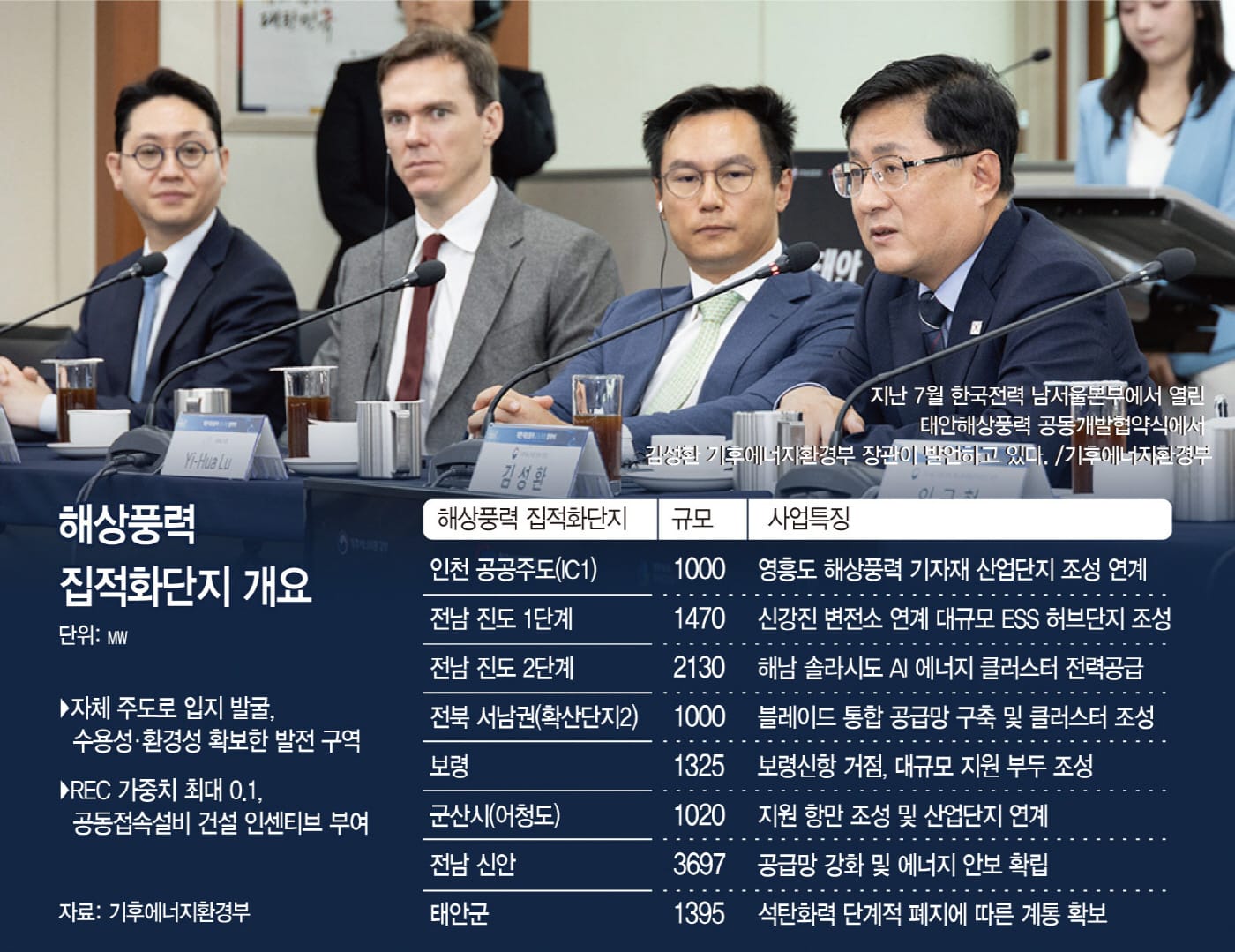
Seven months have passed since the government conditionally designated eight offshore wind integrated zones (OWIZs) without completing military operational coordination consultations, but not a single site has finished such consultations, according to reporting. The zones, valued at 85.4 trillion won in planned investment, now face revocation by year-end, while new military units are submitting objections even as consultations proceed.
According to the Ministry of Climate, Energy and Environment (MCEE) and industry sources on November 4, all eight newly designated or expanded OWIZs nationwide as of March are currently undergoing military operational coordination consultations as of October 27. The total planned capacity is 13,037 megawatts. The government set a year-end deadline for completing military consultations at all eight sites, and failure to do so could result in reduced designation scope or revocation of designation.
Military Objections Complicate Consultations
Military consultations are becoming more complex as new objections are submitted during the process. Units that were not originally consultation partners have belatedly submitted objections, and the Navy has submitted operational review opinions on all eight sites. Opinions range from flagging potential problems in certain waters to expressing serious concerns about operational disruption, leaving local governments to navigate differing military requirements.
When military training zones overlap with planned development areas, not only turbine locations but the entire project area may need to be changed. While radar detection gaps can be addressed with supplementary equipment, overlapping training zones may restrict turbine installation itself. Local governments selected waters based on project viability and community acceptance but failed to account for military constraints, while the military finds it difficult to disclose operationally sensitive areas. Developers are therefore proposing layouts and confirming installation feasibility through this process.
The Ministry of National Defense (MND) response sent to South Jeolla Province in June specified concrete military requirements. Regarding the Jeonnam 10 power project within the Sinan OWIZ, it flagged limitations on maritime surveillance equipment detection and identification missions while demanding Navy transit route security. The Air Force also noted that air control radar shielding could limit air traffic control missions and required either turbine relocation or measures to resolve operational constraints.
Year-End Deadline and Designation Risk
When the government finalized the OWIZs in March, it set a year-end deadline for completing military consultations at all sites. The Jindo 2 zone must also complete maritime boundary dispute consultations by the same deadline. Although the government launched the Offshore Wind Power Promotion Group in December of last year to support inter-agency consultations, all eight sites with differing military requirements now face judgment on whether their designations will be maintained.
Military consultation issues are also affecting developer selection for the Southwest Offshore Wind Expansion 2 zone in North Jeolla Province. After KOWEPO (Korea Western Power) consortium withdrew its business plan, North Jeolla Province internally reviewed a reannouncement for late November. However, the MCEE is prioritizing whether military consultations can be completed by year-end to maintain the OWIZ designation, and is not yet prioritizing a new call for proposals.
New Applications Effectively Ended
New OWIZ designation applications effectively ended in March. If existing designations are revoked, reapplication under the same system becomes difficult, and conversion to individual power projects or government planned siting under the Special Act on the Promotion of Offshore Wind Power Deployment and the Development of Related Industries still requires military operational coordination consultations. Even if developers are newly selected or implementation methods change, location consultations with the military must be resolved first.
An official from the MCEE's Offshore Wind Power Promotion Group stated, "All eight sites are conducting consultations with their respective military units, but none have been resolved yet," and added, "Zones that fail to meet designation conditions by year-end must be considered for revocation."
Original Korean article: Asia Today
English brief by Korea Wind Intelligence, koreawindintel.com