Skip to content

Korea's RPS Exit: The Right Move, Possibly the Wrong Map

Twelve years in, Korea is finally dismantling the only REC-based renewable obligation left in the developed world. The destination makes sense. The route still has a few unmarked turns.

Korea's RPS Exit: The Right Move, Possibly the Wrong Map
Published:
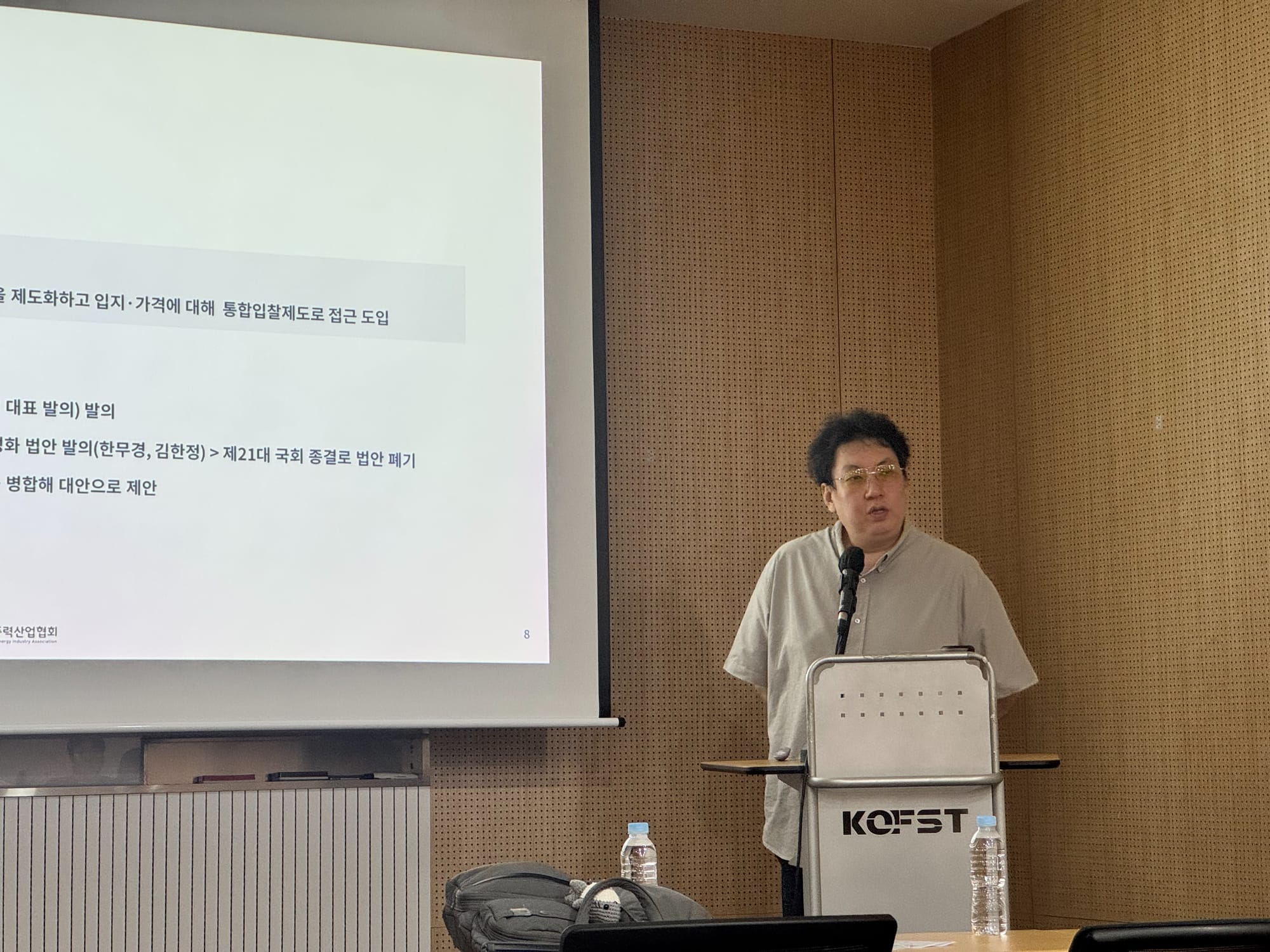
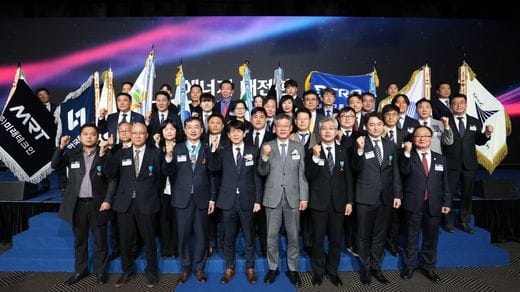
South Korea National Assembly — RPS reform policy decision, March 2026
Market Lens Policy & Regulation

Korea's RPS Exit: The Right Move, Possibly the Wrong Map

Twelve years in, Korea is finally dismantling the only REC-based renewable obligation left in the developed world. The destination makes sense. The route still has a few unmarked turns.

Korea Offshore Wind Intelligence March 2026 Policy & Regulation
RPS in force 12 years 2012 → 2024, last REC-obligation in OECD
RPS compliance cost KRW 4T 2012–2024 — 10× increase over 12 years
Projects mid-development ~8 GW Structured under old rules — transition unclear
UK CfD introduced 2015 Reference model Korea is now following
The Decision

Korea just killed its RPS. After twelve years, it is retiring the only REC-based obligation left in the developed world.

In May 2024, South Korea's Ministry of Trade, Industry and Energy made the announcement the renewable energy industry had been anticipating — and dreading — for years: the Renewable Portfolio Standard (RPS), in operation since 2012, would be phased out and replaced by a competitive auction mechanism modelled on the UK's Contract for Difference (CfD) system.

The policy logic is defensible. RPS was designed for a different era — one in which renewable energy needed regulatory mandates to exist at all. In 2012, that was broadly true. In 2026, with offshore wind at scale and solar prices at record lows, the argument for a blunt obligation-plus-certificate system has largely collapsed.

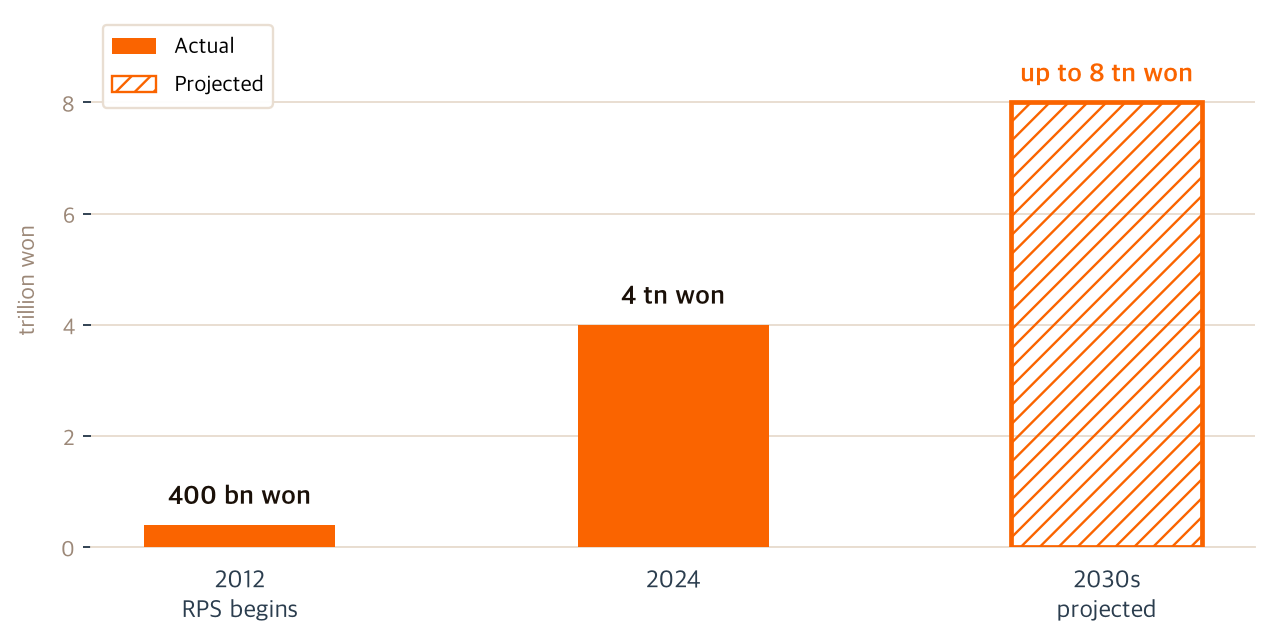
Korea's RPS had three structural problems that could not be fixed from the inside. It created perverse incentives that favoured small-scale solar over offshore wind. It produced escalating compliance costs — the climate and environment surcharge (climate & environment surcharge, climate & environment surcharge) grew tenfold in twelve years, from 400 billion KRW in 2012 to 4 trillion KRW in 2024, with projections as high as 8 trillion KRW if left unreformed. And it was increasingly disconnected from the energy mix Korea actually needs: large-scale, dispatchable, capital-intensive offshore wind.

The decision to exit RPS is correct. The question worth examining is whether Korea has designed a credible replacement — or a destination without a map.

The Cost Trajectory That Made Reform Inevitable
KRW 400B Climate surcharge (2012 — RPS Year 1)
KRW 4T Climate surcharge (2024 — 12 years later)
Up to 8T KRW Projected if unreformed (long-term)
10× Increase multiplier over 12 years
📊

Continue Reading

This analysis continues with five more sections — covering the structural failures of RPS, the government's CfD blueprint, the LCOE trap, three unresolved transition questions, and five signals to watch in the next 18 months.

Background

Twelve Years of RPS: What It Built, What It Couldn't Fix

The RPS logic was straightforward: mandate that large generators source a rising share of their power from renewables, let them trade certificates to fulfil that obligation, and let the market find the most efficient path. In practice, the outcome was mixed. Korea built solar capacity and created a functioning certificate market. Three structural failures explain why it could not deliver the offshore wind capacity Korea's energy transition requires.

1
The market found the cheapest path to compliance — and it wasn't offshore wind

RPS obligations were met through a certificate market. Obligated parties had every incentive to source RECs from the cheapest available technology — rooftop solar and accessible onshore sites. Offshore wind received higher REC weightings, but multipliers do not make offshore wind cost-competitive with solar in a compliance market optimised for lowest-cost fulfilment. The mechanism produced deployment at minimum cost. It did not produce the offshore wind capacity Korea's energy transition requires. Solar deployment expanded dramatically. The underlying capacity mix became increasingly lopsided.

2
Price volatility made offshore wind financing structurally harder

Offshore wind projects require bankable, long-duration revenue certainty. REC prices are volatile — determined by compliance demand, REC supply, and policy changes that obligated parties cannot predict. Lenders financing a 25-year offshore wind project cannot underwrite revenue against a certificate market that reprices monthly. This is not a marginal problem. It is the primary reason Korean offshore wind attracted less project finance than comparable markets in the UK, Taiwan, and Germany.

3
The ceiling effect: growth capped by obligation ratio design

RPS obligations were set as a percentage of total generation — meaning the mechanism's growth potential was directly limited by the rate at which the obligation ratio was increased. Raising the ratio faster was politically constrained by the compliance cost exposure of large utilities. The result: a system that could expand renewable capacity incrementally but could not catalyse the step-change in offshore wind investment that Korea's 2030 targets require.

"The problem with RPS is not a flaw in individual provisions. It is a structural limit of the system itself — one that cannot be overcome through incremental adjustment within the mechanism."

— Kim Eun-seong, Deputy Director, NEXT Group (NEXT)

The Government's Blueprint

Five stated goals. One new mechanism. Here is what the replacement actually involves — and where the design gaps are.

The government's RPS replacement framework — announced by MOTIE in May 2024, now administered by the newly formed Ministry of Climate, Environment, and Energy (MCEE) — sets out five objectives for the transition:

Goal 1 Capacity-based targets, not generation-ratio mandates

Shifting from a percentage-of-generation obligation to an installed-capacity target framework. This directly addresses the ceiling effect and aligns the policy metric with what the grid actually needs: gigawatts of firm offshore capacity, not megawatt-hours of obligation fulfilment.

Goal 2 CfD-style competitive auction with long-term price certainty

A strike price auction mechanism that provides 15–20 year revenue certainty for winning projects. This is the structural change offshore wind developers need most — and the element most directly copied from the UK model. The question is execution: auction volume, frequency, and whether the strike price calculation methodology will produce prices that are bankable rather than aspirational.

Goal 3 State-owned developer participation via build-and-transfer

Encouraging public power generators to directly build renewable capacity rather than purchase RECs. This reduces compliance cost exposure for obligated parties and deploys the balance sheets of state utilities more directly into the energy transition — but also risks crowding out private investment if the mechanism design isn't carefully balanced.

Goal 4 Technology-specific bidding to rebalance solar vs. wind

Separate auction tracks for solar, onshore wind, and offshore wind — preventing solar from undercutting offshore wind in a single-technology competition. This is the most directly corrective response to RPS's structural bias, and it is the right call. The risk is that technology-specific floors result in strike prices that don't reflect actual competitive tension.

Goal 5 Private market reference pricing via the auction mechanism

Using auction strike prices as the reference price for bilateral PPA negotiations — creating a market-anchored pricing signal that reduces the opacity and government intervention that plagued the REC market. In theory, sound. In practice, this requires a liquid, competitive auction market to function as intended — and Korea is not there yet.

The LCOE Trap

When "competitive" auction design meets Korean offshore wind economics — and why the UK model doesn't transplant directly.

The CfD model works in the UK for a specific set of reasons: a mature offshore wind supply chain, competitive tension across dozens of qualified developers, grid connection certainty backed by Ofgem-regulated timelines, and a financing market accustomed to underwriting offshore assets. Korea has none of these conditions fully in place.

Korean offshore wind faces a Levelized Cost of Energy (LCOE) problem that a pure competitive auction will not solve. Project costs in Korea are structurally higher than comparable European markets — due to shallow water depths in the Yellow Sea and South Sea, relatively immature domestic supply chains, complex multi-stakeholder permitting regimes, and higher cost of capital reflecting policy uncertainty. An auction mechanism that sets strike prices based on assumed European-equivalent LCOEs will systematically underprice Korean offshore wind reality.

This is not a theoretical concern. Taiwan ran into exactly this problem in its early CfD auctions — where administratively set price caps forced developers to bid below bankable levels, resulting in projects awarded and then quietly shelved. Korea has the opportunity to design around this trap. It is not yet clear that it will.

The Countries That Already Made This Transition
🇬🇧 UK RPS → CfD (2015). Now world's most mature offshore wind auction market. 10 years of iterative design refinement.
🇮🇹 Italy RPS abolished 2013 (declared), 2016 (completed) → auction system. Two-year market gap during transition.
🇯🇵 Japan RPS 2003 → FiT 2012 → auction 2017. Phased transition minimised market disruption.

The common thread across all three transitions: the countries that got it right took time to design the replacement mechanism before dismantling the existing system. They ran parallel policy frameworks during the transition, protected projects already mid-development, and published detailed auction rules 12–18 months before the first auction opened.

Korea is moving faster than any of them. Whether that speed is an asset or a liability depends entirely on the quality of the design work done in the next 12 months.

"The destination is correct. The question is whether the government has drawn a route map detailed enough to actually get there — or whether we are navigating toward a CfD system that exists in announcements but not yet in implementable rules."

— KWI Analysis, March 2026

The Unmarked Turns

Three unresolved questions the transition announcement didn't answer — and that the market needs answered before it can move.

1
Who bears the legacy REC liability during the switchover?

Obligated parties under RPS — 29 large power generators — have open REC positions and multi-year compliance obligations. The transition framework has not specified whether these obligations are grandfathered, cancelled, or converted. For projects mid-development under RPS rules, this creates acute uncertainty: do they complete under the old system, transition mid-stream to the new auction framework, or face a gap period with no applicable mechanism? This is not a technical detail. It is the question that determines whether Korea's pipeline of 8 GW of mid-development projects survives the transition.

2
Will the new auction design actually work for capital-heavy offshore projects?

CfD auctions require several design elements that Korea has not yet published: strike price methodology (administratively set or market-discovered?), auction volume and frequency (annual rounds or periodic?), qualification criteria for offshore wind (grid connection guarantees required?), and indexation mechanisms that protect against construction cost inflation over a 4–6 year development timeline. Until these parameters are published, offshore wind developers cannot run bankable project models. Capital has already begun waiting.

3
What happens to the ~8 GW already mid-development under the old rules?

Korea's offshore wind pipeline — projects with environmental permits filed, land rights acquired, or early-stage power purchase agreements negotiated — was structured entirely within the RPS/REC framework. These projects cannot be rebid into a CfD auction without material restructuring of their financing assumptions. A formal grandfathering mechanism, transition tariff bridge, or negotiated transfer pathway is required. The government has signalled awareness of this problem. It has not yet offered a solution.

What to Watch

Five signals in the next 18 months that will tell you whether Korea's RPS exit is a managed transition or a market disruption.

  • Publication of the first CfD auction rules and timeline

    The single most important signal. A published auction framework — with strike price methodology, volume, qualification criteria, and bidding calendar — tells the market that the government has done the design work. An announcement of an announcement is not sufficient. Watch for the secondary legislation and MCEE implementing guidelines that will accompany (or fail to accompany) the policy declaration.

  • Grandfathering framework for RPS-era projects

    How Korea handles the 8 GW of mid-development projects will be the clearest indicator of whether this transition is developer-friendly or developer-hostile. A clear grandfathering mechanism — published before RPS formally ends — is the minimum required to prevent the pipeline from stalling. Watch for formal MCEE guidance by Q3 2026.

  • Technology-specific auction volume for offshore wind

    The first CfD auction round's offshore wind allocation will signal whether the government's commitment to technology-specific bidding translates into meaningful volume. A token offshore allocation in a solar-dominated auction is effectively a continuation of RPS's structural bias under new branding. Watch for whether the offshore GW target in Year 1 is consistent with the 2030 10.5 GW construction objective.

  • Strike price calibration vs. actual Korean LCOE

    When the first auction strike prices are published, compare them against independent LCOE estimates for Korean offshore wind. A strike price materially below bankable LCOE — which independent analysts estimate at 130–160 USD/MWh for Korean conditions — will produce an auction that clears on paper but delivers no construction starts. This is the Taiwan trap. The distance between announced strike price and developer willingness to proceed will be the market's real verdict on the transition design.

  • International developer response to the first auction

    Ørsted, Equinor, Shell, and the European developers currently active in Korea are sophisticated CfD participants. Their decision to bid or not bid in the first Korean CfD auction — and at what volume — will be the clearest possible market signal about whether the mechanism design is credible. An auction that clears only with domestic bidders, or that sees European developers withdraw, is a warning sign that the design has not resolved the bankability gap.

The Bottom Line

The destination is right. The route map is still being drawn.

Korea's decision to exit RPS is — taken on its own terms — the correct call. The system had run its course. Its structural biases were not fixable through incremental adjustment. The direction of travel, toward a competitive auction mechanism with long-term price certainty, is aligned with best international practice.

But a correct destination is not the same as a navigable route. The three unresolved questions — legacy REC liability, CfD design parameters, and mid-development project treatment — are not minor implementation details. They are the questions that will determine whether Korea's offshore wind pipeline survives the transition intact, or whether it loses 12–24 months of development momentum while the market waits for policy clarity.

The government has announced the destination. The market is waiting for the map. For developers and investors with active positions in Korean offshore wind, the prudent posture is to model two scenarios: one in which the transition design is published and credible by Q4 2026, enabling construction starts under the new system by 2028; and one in which design delays push the effective start of the CfD era to 2028–2029, leaving a 2–3 year gap in policy-backed revenue certainty.

KWI View — March 2026

Korea is making the right structural move in exiting RPS. The transition risk is not that the destination is wrong — it is that the government moves faster on announcement than on design. The next 12 months will determine whether Korea's CfD transition is a market catalyst or a market pause. Watch the auction rules, not the policy declarations.

"The direction of RPS abolition is correct. The question is not the abolition itself — it is how quickly a credible replacement takes hold."

— KWI Analysis, March 2026

Related Reading on koreawindintel.com
Tags: Deep Dive

More in Deep Dive

See all

More from Korea Offshore Wind Intelligence

See all