Executive Insight
South Korea’s push to scale offshore wind investment signals a more durable policy-and-capital tailwind for renewables, driven by both resource fundamentals (strong coastal wind regimes) and rising public support for environmental action. For developers and investors, the key takeaway is that offshore wind is increasingly positioned as a strategic pillar for power-sector decarbonisation—supporting long-tenor infrastructure financing and a larger, more bankable project pipeline, provided permitting and grid integration keep pace.
International sponsors should watch how this momentum translates into execution: the viability of large-scale buildout will depend on regulatory clarity around site allocation, environmental assessments, fisheries and maritime stakeholder coordination, and predictable offtake structures. Where pricing mechanisms or procurement schedules are inconsistent, bid risk rises and financing costs widen—particularly for projects reliant on imported turbines, specialized vessels, and FX-exposed contracts. Conversely, stable procurement and streamlined approvals would lower development friction and improve lenders’ confidence in construction schedules, milestone certainty, and revenue visibility.
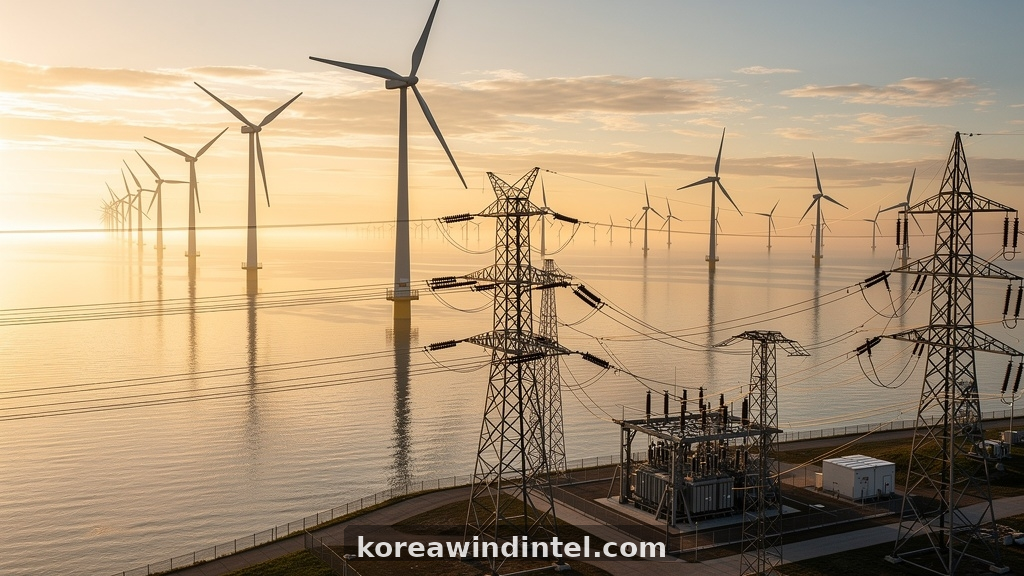
Supply chain implications are equally material. A higher volume of projects typically pulls forward investments in local manufacturing, port upgrades, installation capacity, and O&M capabilities—areas where overseas OEMs, cable suppliers, foundation fabricators, and marine contractors may find near-term entry points via partnerships or localization strategies. However, scaling turbine generator demand can also expose bottlenecks (component lead times, vessel availability, grid connection queues) that compress timelines and create cost overruns. Investors should stress-test development plans for contingency in logistics and interface management, and evaluate counterparties’ track records in Korean permitting and community engagement. Over the medium term, if policy support continues to strengthen alongside public acceptance, South Korea could offer a deeper, more investable offshore wind market—attractive for long-term infrastructure capital and strategic players seeking Asia-Pacific growth beyond Europe’s crowded auction landscape.