Executive Insight
The designation of an “integrated complex” linked to the Boryeong offshore wind project signals a push to streamline Korea’s development pathway by concentrating permitting, grid/interconnection planning, and industrial support into a defined zone. For developers, this kind of zone-based approach can reduce early-stage uncertainty—often the biggest driver of schedule slippage in Korea—by clarifying which agencies lead approvals, how maritime use conflicts are mediated, and what public infrastructure (ports, O&M bases, testing facilities) will be prioritized.
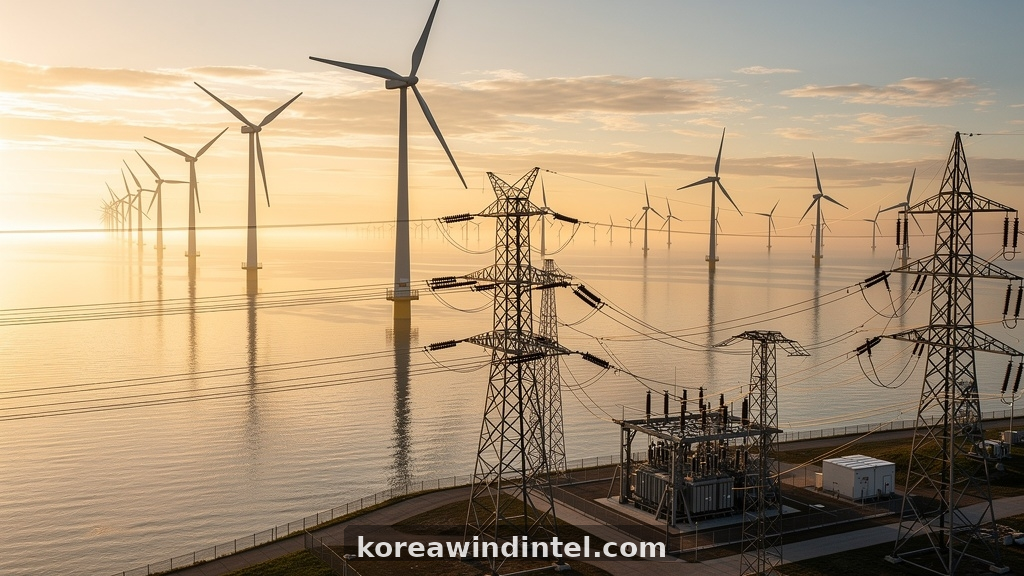
For international investors and OEMs, the key implication is potential de-risking of the project pipeline in the West Coast corridor if the integrated complex functions as a “fast lane” for environmental review, stakeholder coordination, and local supply chain participation. Korea’s offshore wind bankability has been constrained by multi-layered permitting, community acceptance dynamics, and ambiguous timelines for grid buildout; any formal mechanism that bundles development support can improve financing terms by increasing confidence in notice-to-proceed timing and construction windows. If the designation is paired with transparent procurement schedules and clearer offtake frameworks, it could also help narrow the pricing gap that has challenged bid participation in recent years.
The mention of offshore wind testing is strategically important: testing and certification capacity (components, turbines, foundations, cables, and reliability validation) is a practical bottleneck as Korea tries to localize parts of the value chain while meeting international standards. Expanded testing infrastructure can shorten qualification cycles for domestic suppliers, support warranty and performance risk management for lenders, and make Korea more attractive for global tier-1 suppliers seeking an APAC manufacturing and validation base. Developers should watch how the integrated complex translates into concrete measures—grid connection commitments, port upgrades, and standardized permitting timelines—because these will determine whether Boryeong becomes a replicable model for accelerating Korea’s offshore wind pipeline.