What This Story Is About
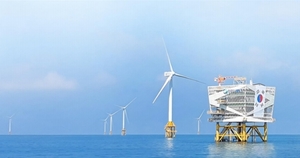
South Korea's Ministry of Climate (likely referring to the Ministry of Trade, Industry and Energy, MOTIE, which oversees energy policy) has initiated a competitive bidding process for 1.8 gigawatts of offshore wind power capacity, to be awarded in the first half of 2024. A significant feature of this tender is the government's decision to adjust the upper limit for the bid price downwards. This move signals a strategic shift towards securing more cost-competitive renewable energy, directly impacting the financial viability and investment strategies for both domestic and international developers actively pursuing projects in the Korean offshore wind market.
Read original article from: electimes.com
Background and Context
South Korea's competitive bidding system for offshore wind power, primarily managed by the Ministry of Trade, Industry and Energy (MOTIE), marks a deliberate transition from earlier feed-in tariff (FIT) schemes. The aim is to foster a more market-driven development environment. While initial bidding rounds focused on stimulating nascent project development, the government’s evolving strategy increasingly emphasizes cost-efficiency alongside project bankability. This latest bid announcement, particularly the downward revision of the price cap, directly reflects MOTIE's ongoing efforts to balance developer profitability with consumer affordability and broader national energy security objectives.
The establishment of a robust bidding framework is central to Korea's ambitious decarbonization targets. Developers have historically grappled with a fragmented and often protracted permitting regime, alongside significant challenges in grid connection and securing viable power purchase agreements. Although the government has introduced initiatives like the 'One-Stop Shop' to streamline permitting, practical implementation remains a key hurdle. The decision to lower the bid price ceiling aligns with a global trend observed in mature offshore wind markets, where governments leverage increasing competition and technological advancements to drive down the levelized cost of energy for renewables. This policy adjustment is also driven by the imperative to manage public funds responsibly and ensure the overall cost burden on end-users remains sustainable amid fluctuating energy markets.
Insight and Outlook
The introduction of a reduced price cap in this 1.8GW bidding round presents both a significant challenge and a strategic opportunity for international developers and investors in the Korean market. While it undeniably intensifies competition and necessitates greater cost efficiencies, it simultaneously reinforces the government's commitment to substantial offshore wind deployment, albeit under more stringent financial terms. Developers must now meticulously re-evaluate their project economics, prioritizing supply chain optimization, leveraging economies of scale, and exploring innovative financing structures to maintain attractive returns.
Several critical risks persist. The multi-layered and often protracted permitting process continues to be a major impediment, frequently leading to project delays and escalating development costs. Grid connection availability and the robustness of transmission infrastructure also pose substantial bottlenecks for many proposed projects. Furthermore, the emphasis on local content requirements, while intended to bolster domestic industry, can introduce additional complexity and cost for foreign participants. Investors should closely monitor the actual awarded prices from this round, as they will establish a crucial benchmark for all subsequent auctions. Additionally, tangible progress on the promised 'One-Stop Shop' permitting reforms and any advancements in dedicated offshore grid infrastructure will serve as vital triggers indicating a genuinely improved investment climate. For this policy shift to yield its intended results, a more holistic approach that simultaneously addresses price competitiveness and regulatory certainty is paramount.
This brief is prepared for informational purposes only. It is based on publicly available sources and AI-assisted analysis. It does not constitute investment advice. Readers should conduct their own due diligence before making any decisions.