What This Story Is About
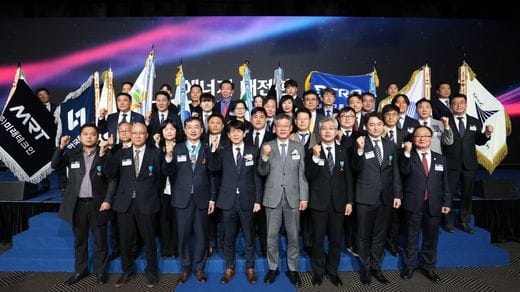
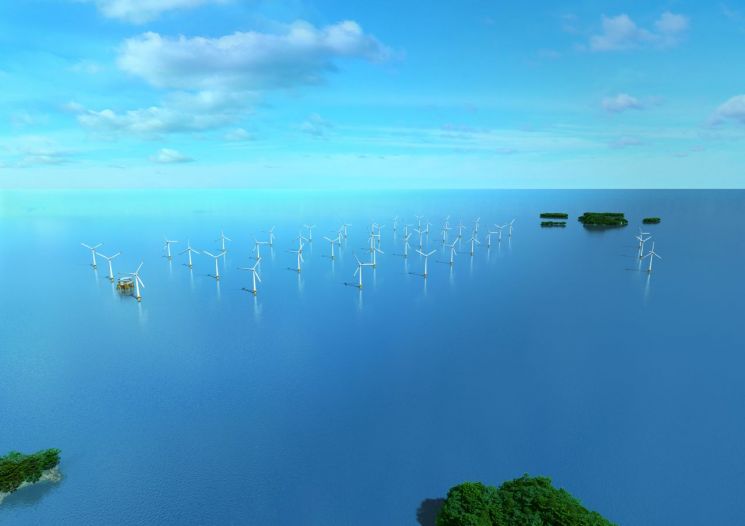
Korea Midland Power (KOMIPO) said on March 16 that the Boryeong Offshore Wind Power Project—being jointly advanced with Boryeong City—has been designated as an offshore wind power development project. KOMIPO expects the designation to accelerate permitting and overall project development in the Boryeong area. The immediate significance is procedural: a formal “development project” label typically clarifies what can move forward, when, and under which administrative tracks, reducing the risk that the project stalls in sequential reviews.
Background & Context
For overseas developers and suppliers, this item matters less for its technical scope—KOMIPO did not disclose capacity, turbine procurement plans, or a target COD—and more for what the designation implies about local alignment and administrative readiness. Offshore wind projects in Korea often become delayed not because developers lack ambition, but because projects move through multiple approvals that can be slowed by conflicts over sea-space use, consultations with local stakeholders, and the practical sequencing of studies and permits. A “development project” designation is a signal that the project has cleared at least one key gate and can now push into a faster, more structured permitting cadence than an early-stage concept.
Another important element is governance. KOMIPO is positioning the project as “jointly promoted” with Boryeong City, making the municipality an explicit co-driver rather than a passive host. That is a material detail in Korea’s offshore wind market, where local governments frequently influence the pace of consultations and the political viability of maritime developments. A city-backed structure can reduce the probability of a project being perceived as externally imposed, and it can improve coordination around port logistics, local supply-chain participation, and community-facing benefit frameworks—areas that often become friction points once surveys and permitting become visible to the public.
The Boryeong location adds another layer of context. Boryeong is already widely recognized as an energy and industrial site, and KOMIPO’s involvement suggests the project is being framed within a broader regional energy-transition narrative, even if the release does not explicitly describe it that way. For KOMIPO, the designation is also a portfolio-management milestone: as a power producer, it is incentivized to convert offshore wind from a planning theme into a permittable asset with a clearer development pathway, because early administrative progress helps de-risk later steps such as contracting strategy, grid connection planning, and—ultimately—bankability. In practical terms, designations like this tend to improve a project’s internal priority and resourcing, because they create measurable near-term deliverables (permits, surveys, stakeholder processes) rather than open-ended feasibility work.
Insight & Outlook
This development is a positive signal—but a narrow one. It indicates that KOMIPO and Boryeong City have secured a formal administrative footing that should reduce “process risk” in the near term. However, the announcement leaves key commercial and execution questions unanswered: project scale, expected timeline, grid interconnection assumptions, contracting model (EPC vs. multi-package), and how stakeholder engagement will be structured as permitting accelerates. For foreign turbine OEMs, foundation suppliers, marine contractors, and financiers, the absence of these details means the designation should be read as a green light for market engagement—not yet as a reliable proxy for procurement timing.
What to watch next is whether KOMIPO follows the designation quickly with tangible development outputs: publication of a permitting roadmap, initiation of surveys, early grid discussions, and a clearer statement of the project’s delivery model and partner roles. If KOMIPO begins pre-qualification or market-sounding for major packages, the designation will have effectively translated into commercial momentum. If, instead, the project remains “designated” without subsequent milestones, it will reinforce a familiar pattern in Korea where administrative labels arrive before the hard constraints—community consent processes, maritime coordination, and grid readiness—are fully resolved. The most likely next step is a phased ramp-up of formal permitting work and stakeholder consultations, using the designation to compress the sequencing of approvals and to demonstrate visible progress in Boryeong.