Executive Insight
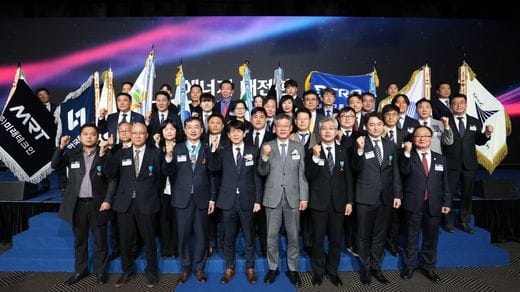
The KFWind consortium’s plan to pursue a floating offshore wind project in South Korea underscores how developers are positioning for the next phase of Korea’s offshore build-out, as the government targets 13GW. While the announcement is high-level, it reinforces a market trend: new entrants and consortium-led structures are increasingly necessary to navigate Korea’s permitting complexity, local-content expectations, and evolving grid and offtake frameworks—particularly for floating projects that depend on deepwater sites and more specialized supply chains.
For international investors and offshore wind developers, the signal is less about one project’s immediate scale and more about pipeline credibility and timing. Floating offshore wind in Korea remains sensitive to bankability fundamentals—route-to-market certainty (e.g., auctioned offtake versus corporate PPAs), grid connection availability, and clarity on marine spatial planning and environmental review. Consortia can de-risk early stages by pooling development expertise, securing local partners for stakeholder engagement, and building a credible procurement and construction strategy. However, financing will still hinge on whether Korea continues improving revenue stability mechanisms and streamlining multi-agency approvals, which have historically extended development timelines.
Supply chain implications are material. Floating projects typically require different port capabilities, heavy-lift logistics, mooring and dynamic cable packages, and serial assembly space—areas where Korea is actively assessing industrial readiness. A credible floating pipeline can catalyze investment in ports and fabrication capacity, but developers will need to balance local sourcing ambitions with global supplier availability and cost. For overseas firms, near-term opportunity lies in early partnering—FEED, site assessment, mooring design, installation planning, and grid solutions—while monitoring policy signals that determine auction cadence, project eligibility, and the practical path to FID.