Executive Insight
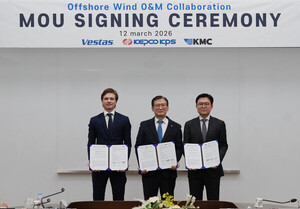
Kepco KPS’s establishment of an offshore wind operations and maintenance (O&M) base, incorporating offshore wind testing capabilities, signals a practical shift in South Korea’s market from early-stage development toward operational execution. For a country trying to convert a large permitted pipeline into financed and grid-connected capacity, credible local O&M infrastructure is increasingly a bankability factor rather than an optional add-on. The immediate implication is reduced operational uncertainty for projects entering construction and early operations, particularly around asset integrity, troubleshooting lead times, and service availability.
For international developers and investors, the announcement points to a maturing service ecosystem that can support availability guarantees, long-term service agreements, and more robust operating cost assumptions. Where Korea’s offshore wind risk premium has been shaped by permitting complexity, grid constraints, and local content expectations, a stronger domestic O&M platform can help lower perceived operational risk—supporting tighter debt terms and more competitive equity return profiles over time. It may also intensify competition among turbine OEMs and third-party service providers: overseas players will need clearer partnership strategies (local JV models, training programs, spare-parts logistics, and digital condition monitoring) to avoid being crowded out by incumbent power-sector service companies.
Strategically, the inclusion of testing functions matters for reliability and standardization. If the base is used to validate components, procedures, and safety/inspection regimes, it could accelerate the adoption of common technical standards and shorten commissioning and troubleshooting cycles—both key to improving project performance and investor confidence. Developers should watch how this capability is integrated into procurement and certification requirements, and whether it aligns with government efforts to localize supply chains and improve workforce readiness. In the near term, the most tangible impact may be on project execution planning: availability of localized O&M services can influence turbine selection, warranty structures, and port/logistics planning, and could become a differentiator in competitive bidding or offtake negotiations as Korea pushes more projects toward final investment decision.