Executive Insight
KEPCO’s soft fourth-quarter performance is being treated by the market as volatility rather than a break in the utility’s longer-term recovery narrative. For Korea’s renewable energy and offshore wind ecosystem, that distinction matters: the pace of grid expansion, connection queues, curtailment risk management, and transmission cost allocation all hinge on a financially stable national utility with predictable policy backing. Investors are therefore focusing less on one quarter’s earnings and more on whether structural improvements—tariff normalization, fuel cost pass-through discipline, and tighter procurement—continue to take hold.
The March 25 vote flagged by investors is important as a potential signal on governance and policy alignment—factors that directly shape Korea’s capital cycle for grids and generation transition priorities. For international offshore wind developers and lenders, clarity on KEPCO’s investment posture can influence near-term decisions on bid participation, offtake strategies, and financing assumptions. If the vote outcome reinforces policy consistency, it may support a more bankable outlook for grid reinforcement and substation upgrades—key bottlenecks for large-scale offshore wind commissioning. Conversely, any indication of policy drift could widen risk premiums, push developers toward more conservative construction schedules, or increase reliance on alternative revenue stacking (such as corporate PPAs or ancillary services) where feasible.
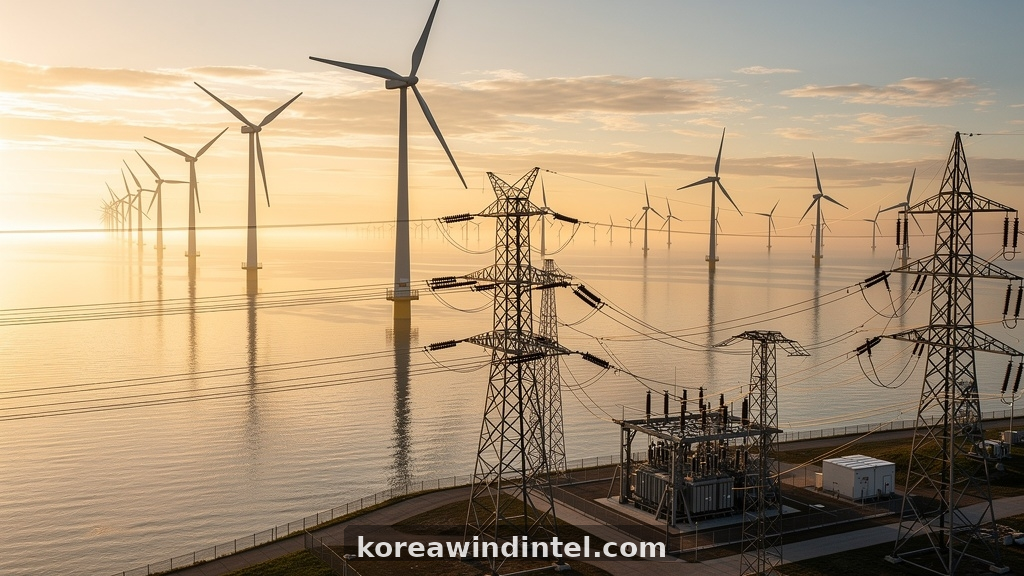
Strategically, the episode highlights a core Korea market reality: offshore wind pipeline growth is increasingly constrained by network readiness and system integration, not only by seabed permits or turbine supply. International suppliers should watch for follow-on signals around grid capex timing, connection rules, and cost recovery mechanisms, as these can affect procurement demand (cables, substations, transformers) and localization planning. For investors, the key diligence question is whether KEPCO’s structural improvements translate into sustained balance-sheet capacity to execute the grid buildout required for Korea’s next wave of offshore wind projects.