Executive Insight
Hyosung Heavy Industries’ entry into Australia’s energy storage system (ESS) market signals a strategic pivot toward export-led growth in grid infrastructure tied to renewable integration. For South Korean offshore wind, this matters because the economics of large-scale wind increasingly depend on firming capacity—battery storage, grid stabilization equipment, and power electronics—rather than turbines alone. As offshore wind testing and development progress, developers in Korea are likely to face higher scrutiny on curtailment risk, connection timelines, and grid code compliance, areas where ESS and related balance-of-system solutions are becoming central to bankability.
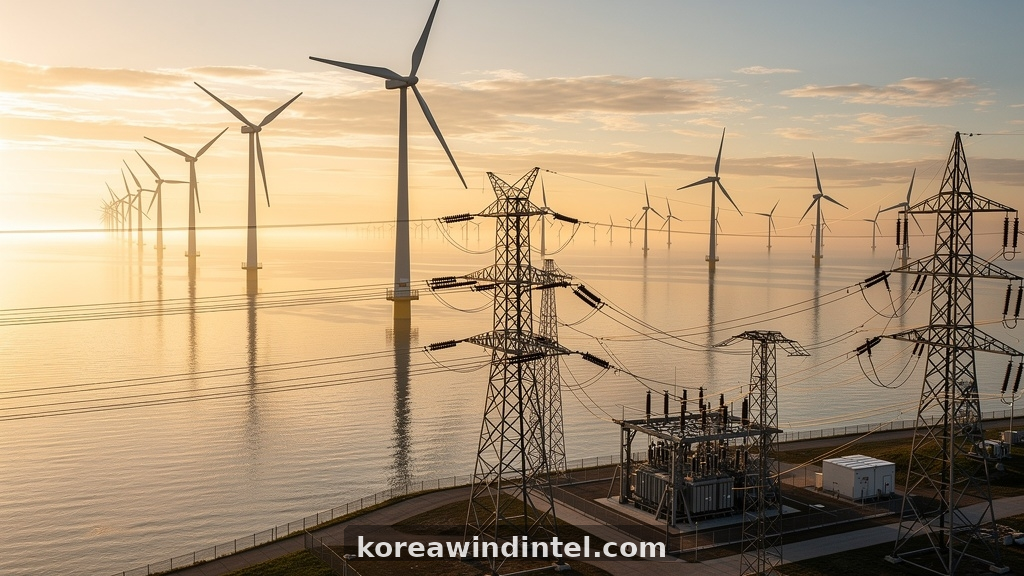
For international investors and offshore wind developers, Hyosung’s move reinforces two trends. First, Korean industrial players are building reference projects abroad to prove performance, qualify with global utilities, and de-risk financing discussions at home and in other export markets. Second, supply chains are converging: offshore wind buildouts are increasingly packaged with substations, transformers, STATCOMs, and battery storage solutions to meet grid requirements and shorten commissioning risk. Developers sourcing Korean electrical equipment may gain from competitive pricing and integrated delivery, but should watch for capacity allocation as Hyosung balances domestic demand with overseas contracts.
From a market and regulatory perspective, Korea’s offshore wind pipeline faces persistent bottlenecks in permitting, interconnection, and local content expectations. Export successes in ESS can strengthen Korean OEMs’ negotiating power and encourage more standardized, financeable technical configurations for offshore wind projects—particularly where storage is used to mitigate price cannibalization and enhance revenue certainty under evolving power market rules. Strategically, overseas deployment in Australia—an advanced renewables market with active storage procurement—can also accelerate product certification and operational track records, which lenders and insurers increasingly require for new equipment classes in offshore wind and grid projects.